
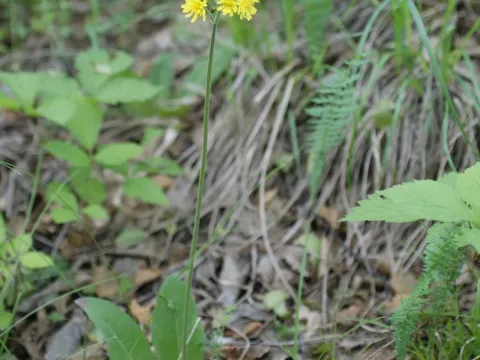
Small-flowered hawk's-beard
Crepis praemorsa
The small-flowered hawk's-beard (Crepis praemorsa) is a perennial herb belonging to the Asteraceae family. It is a widely recognized plant in temperate ecosystems, functioning as a valuable component of permanent pastures and meadows.
What the section contains
Small-flowered hawk's-beard
Originating from Europe and parts of Western Asia, this species demonstrates high adaptability to various soil types. It flourishes in well-drained, nutrient-rich soils, often found in open grasslands, forest edges, and light woodland areas.
Botanically, it is distinguished by a short, thickened rhizome and a basal rosette of oblong leaves. The flowering stem is typically unbranched or slightly branched, topped with a single dense yellow flower head that blooms from late spring to mid-summer.
In terms of climatic requirements, it prefers temperate environments and shows excellent resilience to cold winters. The plant performs best in neutral to slightly acidic soils that receive sufficient sunlight but are protected from extreme drought conditions.
For agricultural purposes, the species is valued for its nutritional contribution to animal feed. Although not a primary industrial crop, its presence in natural hayfields enhances the diversity and forage value of the harvested biomass.
While relatively hardy, the plant can be susceptible to powdery mildew infections during periods of high humidity and stagnant air. Proper spacing and site selection are essential for maintaining plant health and preventing fungal spread.
Insect pests, such as aphids and certain species of weevils, represent the primary biological threat. These pests typically feed on the tender young leaves and developing flower buds, which can significantly reduce the overall biomass yield.
Viral infections transmitted by sap-sucking insects may cause leaf yellowing and stunted development. Managing the surrounding weed vegetation helps in reducing the reservoirs of potential vectors that transmit these viruses.
Integrated pest management strategies involve monitoring the population density of insects during the early growth stages. Biological control methods are generally preferred to maintain the ecological balance of the meadow ecosystem.
To ensure healthy growth, it is recommended to manage the moisture levels strictly, as excessive soil saturation promotes root rot. Regular inspection and maintaining good soil structure remain the most effective preventive measures against plant diseases.