
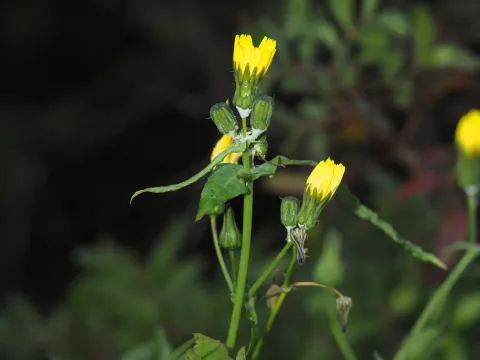
Slender sow thistle
Sonchus tenerrimus
Slender sow thistle (Sonchus tenerrimus) is a herbaceous plant belonging to the Asteraceae family. Originally from the Mediterranean basin, it is a resilient species that has adapted to various ecological niches within its native range.
What the section contains
Slender sow thistle
The plant is easily recognized by its slender, deeply pinnately lobed leaves and delicate stems that contain a milky latex. It usually grows as an annual or short-lived perennial, reaching heights of 60 to 80 centimeters depending on the availability of nutrients.
It thrives in well-drained, lime-rich or rocky soils, showcasing high tolerance to drought conditions. This adaptability makes it a valuable subject for study in arid land agriculture where soil quality is often limiting.
In terms of agricultural management, it requires full sun exposure to produce high-quality biomass. The plant is sensitive to waterlogged conditions, which should be avoided to prevent root rot and physiological stress.
Its primary agricultural utility lies in its role as a supplementary forage plant for small livestock. In specific regions, it has also been historically gathered for human consumption, similar to other members of the genus, due to its nutritional content.
Powdery mildew represents a significant fungal threat, especially in areas where canopy density reduces airflow and increases local humidity around the lower leaves.
Aphid infestations are common, particularly during the vegetative phase, which can stunt plant growth and reduce the overall biomass quality required for fodder purposes.
Larval stages of certain flies can infest the flower heads, which interferes with the reproductive cycle and reduces the plant's ability to propagate itself naturally.
Soil-borne pests like wireworms can cause damage to the root system, which is particularly detrimental to younger plants that have not yet established a deep root structure.
Integrated pest management strategies should focus on maintaining proper field sanitation and ensuring balanced moisture levels to prevent the environmental conditions that favor these pests and diseases.