
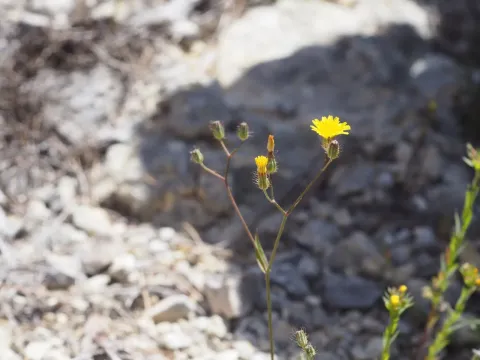
Small-flowered hawksbeard
Crepis micrantha
Small-flowered hawksbeard (lat. Crepis micrantha) is an annual herbaceous plant belonging to the Asteraceae family. It is commonly identified as a weed in various agricultural landscapes across Eurasia, adapting to diverse soil types and environmental conditions.
What the section contains
Small-flowered hawksbeard
The plant originates from the Eurasian region and is found in fields, meadows, and along roadsides. It thrives in open, sunny environments where it does not face significant competition from denser vegetation, demonstrating high ecological resilience.
Botanically, Crepis micrantha is characterized by a taproot system that ensures stability and moisture uptake. The plant develops a rosette of basal leaves, followed by a branching stem that produces numerous small yellow flower heads, typical of the Crepis genus.
Regarding soil requirements, it is undemanding but prefers nutrient-rich, moderately moist soils. It tolerates a range of soil textures from sandy loams to heavier clays, though it often proliferates in agricultural fields where fertilizers are applied, as it readily utilizes available minerals.
While this plant lacks commercial agricultural use, it is a significant species in weed science. Its ability to produce large quantities of wind-dispersed seeds makes it a prolific colonizer of fallow lands and recently disturbed soils within cultivated areas.
The primary threats to Crepis micrantha populations are mechanical agricultural practices. Strategic tillage, particularly deep plowing, effectively buries seeds and disturbs young rosettes, preventing them from establishing a strong foothold in the field.
Biological threats include specific insect populations, such as aphids, which feed on the sap of the hawksbeard. While these insects weaken the plant, they rarely eradicate it, serving more as a limiting factor on its overall vitality during the growing season.
Fungal diseases like powdery mildew frequently infect the foliage, especially in climates characterized by high humidity. This infection causes visible leaf damage and inhibits the plant's ability to allocate energy toward seed production.
Chemical control remains the most reliable method for managing this weed in commercial crops. Selective herbicides are typically effective when applied during the early vegetative stages, specifically when the plant is in the rosette phase before stem elongation.
Integrated weed management remains the best strategy for long-term control. By combining crop rotation with competitive crop density and timely mechanical cultivation, farmers can significantly suppress the presence of this species and protect their primary yields from nutrient competition.