
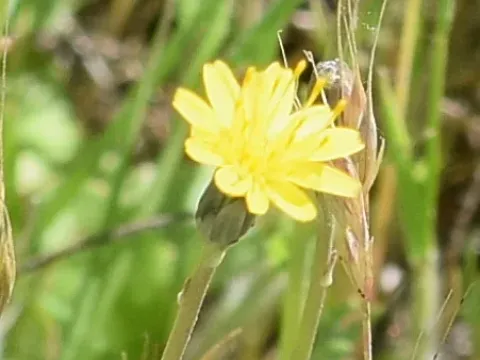
Smooth cat's-ear
Hypochaeris glabra
Smooth cat's-ear (Hypochaeris glabra) is an annual herbaceous plant belonging to the Asteraceae family. While not a primary agricultural crop, it is a significant component of natural grassland ecosystems and is often observed in disturbed agricultural sites.
What the section contains
Smooth cat's-ear
Native to Europe and the Mediterranean basin, this species has successfully naturalized in various regions globally. It thrives in temperate climates, showing a preference for open, sunny habitats where it can complete its life cycle before the onset of extreme seasonal conditions.
Botanically, the plant is characterized by a basal rosette of hairless leaves and erect, branched stems bearing yellow, dandelion-like flower heads. Unlike some relatives, it is generally smaller and prefers well-drained, nutrient-poor soil substrates, which defines its ecological niche.
The crop requires soils with excellent drainage, such as sandy or gravelly loams, to prevent root rot. It is sensitive to highly compacted or waterlogged soils, which makes it a good indicator species for light, sandy, or rocky ground conditions in field surveys.
Agricultural management of smooth cat's-ear is rarely intensive, as it is usually managed as part of wild pasture mixtures. Its lifecycle strategy involves rapid growth and seed production, allowing it to regenerate effectively in grazed or periodically mown areas.
The plant is susceptible to common fungal pathogens such as powdery mildew, especially in environments with stagnant air and high humidity. These infections can limit seed set and decrease the overall forage quality if the population becomes dense within a field.
Pest pressure from aphids and various leaf-feeding insects is generally low but can increase in stressful growing conditions. As a minor species, it does not typically warrant targeted pest control, fitting instead into broader integrated pest management strategies for grasslands.