
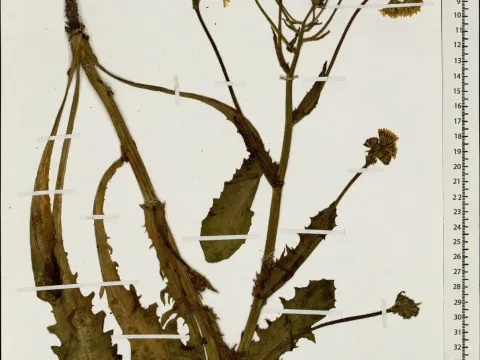
Crepis marschallii
Crepis marschallii
Crepis marschallii is a member of the Asteraceae family that typically establishes itself in early spring under natural conditions.
What the section contains
Crepis marschallii
Agricultural sowing should be performed in prepared soil, with seeds placed at a depth of 1-2 centimeters to ensure effective germination.
Optimal moisture in the upper soil profile is essential for uniform emergence, especially during the cool periods of the early growing season.
The seeding rate must be carefully calculated to ensure proper density, avoiding overcrowding that could limit individual plant development.
Winter-hardy seedlings can endure late frosts, which makes this crop suitable for regions with variable spring weather conditions.
This crop thrives in open, sunny environments and is highly sensitive to shade cast by taller competing vegetation.
It prefers well-drained loamy or chernozem soils with a neutral pH level, which ensures optimal nutrient uptake for healthy growth.
Crepis marschallii demonstrates significant drought tolerance thanks to its deep taproot system, allowing it to survive periods of limited rainfall.
Temperature management is straightforward, as the plant maintains steady growth between 15 and 22 degrees Celsius throughout the season.
Proper soil aeration is critical, as stagnant water and poor drainage can lead to root damage and stunted vegetative development.
The primary economic use of Crepis marschallii lies in its potential as part of a high-quality forage mix for livestock.
Yield stability is heavily dependent on soil fertility and the frequency of moisture availability during the peak vegetative phase.
Foraging value is maximized when the crop is harvested during the early flowering stage, before energy is diverted to seed production.
Multiple cuts are possible within a single growing season if moisture levels are managed correctly and soil nutrients are maintained.
Yield output can be enhanced by implementing a balanced fertilization plan that addresses specific soil nutrient deficiencies.
Common agricultural pests affecting Crepis include various aphids and meadow moths that can cause significant damage to young tissues.
Fungal diseases, such as powdery mildew, often develop in high-humidity conditions, reducing both biomass quality and photosynthesis.
Root rot remains a persistent threat in poorly drained soils, often requiring strict adherence to crop rotation to mitigate long-term impacts.
Leaf rust may appear during the late summer, affecting the overall plant health and reducing the protein content in the forage.
- Integrated pest management practices
- Routine monitoring of field health
- Proper drainage system maintenance
Harvesting for biomass should be timed precisely to the start of flowering, ensuring the best balance between volume and feed quality.
Seed harvest requires careful attention to the browning of the flower heads, as the seeds disperse easily once they reach maturity.
Mechanical harvesting equipment should be adjusted to minimize vibration, preventing premature seed shedding during the harvesting process.
Rapid drying of the biomass is essential after harvest to prevent mold growth and preserve the nutritional integrity of the fodder.
Correct cutting height is vital for plant regrowth, ensuring that the basal rosette remains intact for future production cycles.