
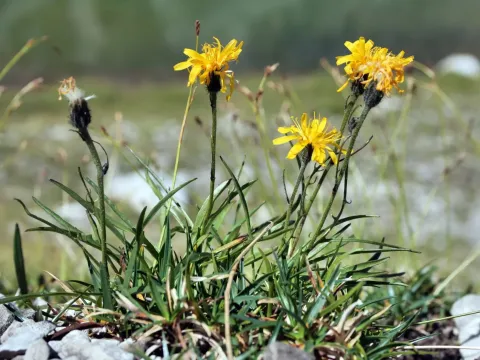
Crepis jacquinii
Crepis jacquinii
Crepis jacquinii, known as Crepis of Jacquin, is a perennial herbaceous plant belonging to the Asteraceae family. It is primarily recognized as a component of natural grasslands and pastures in European mountain regions, thriving in alkaline and limestone-rich soil conditions.
What the section contains
Crepis jacquinii
Botanically, the plant is characterized by a basal rosette of leaves and a robust taproot system that enables it to withstand drought periods. This adaptation is crucial for survival on sunny, exposed slopes where soil moisture is often limited during the peak summer months.
Regarding cultivation requirements, the species prefers well-drained, nutrient-poor to moderately fertile soils. It does not tolerate waterlogging, which often leads to root rot and reduced biomass production, making drainage a critical factor for maintaining healthy stands.
The agronomic management of Crepis jacquinii focuses on low-intensity grazing and hay harvesting. It responds well to traditional land management practices that prevent the encroachment of invasive woody shrubs, thereby preserving the biodiversity of the meadow ecosystem.
Its primary agricultural use is as a component of mixed forage pastures. The plant provides nutritional value for livestock, particularly in alpine ecosystems where highly productive agricultural crops might fail to establish due to harsh climatic and soil conditions.
The species is susceptible to various fungal pathogens, specifically powdery mildew, when stagnant air conditions occur in dense plant communities. Proper grassland management and appropriate grazing pressure help to maintain adequate ventilation and prevent infections.
Insect pests, such as aphids and certain types of coleoptera, may occasionally feed on the foliage. However, in balanced meadow ecosystems, these populations are typically managed by natural predators, requiring no chemical intervention for the maintenance of the stand.