
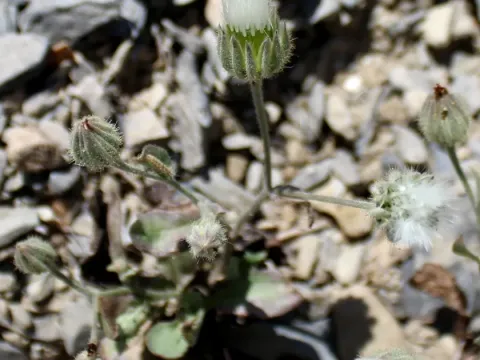
Crepis kotschyana
Crepis kotschyana
Crepis kotschyana is an herbaceous annual plant belonging to the Asteraceae family. While often found in the wild, understanding its biological cycle is essential for researchers interested in its potential as a forage crop or naturalized plant.
What the section contains
Crepis kotschyana
The sowing process typically commences in early spring, as soon as the soil temperatures consistently reach 5–8 degrees Celsius. Early planting allows the crop to establish a deep root system before the onset of the summer heat.
For research plots, seeds are sown in rows spaced 20 centimeters apart to optimize light capture and nutrient utilization. A shallow sowing depth of approximately 1 centimeter is recommended, as deep burial significantly hinders germination.
Germination is rapid under adequate moisture, with seedling emergence usually occurring within 10 to 14 days post-planting. Uniform soil-to-seed contact is critical, achieved by gentle rolling of the seedbed post-sowing.
The establishment phase is marked by the development of a dense basal rosette. This structure helps the plant outcompete surrounding vegetation during the initial growth stages, ensuring a successful establishment in various soil types.
This species thrives in environments characterized by high solar radiation and moderate temperatures. It is well-adapted to semi-arid regions, showing high resilience to fluctuating moisture levels throughout the growing season.
Soil quality requirements are moderate; the plant prefers well-drained, sandy-loam soils with a neutral pH. Excessive moisture or waterlogged conditions are highly detrimental to root health and overall vigor.
Crepis kotschyana is notably drought-tolerant, capable of maintaining growth when many other species exhibit signs of stress. This makes it a potential candidate for regions where water scarcity limits traditional crop options.
The optimal temperature range for flowering and seed maturation is between 20 and 25 degrees Celsius. Extreme heat, combined with drought, may accelerate the life cycle but decrease the total biomass production.
Soil fertility management should focus on balanced nutrient levels. While nitrogen promotes vegetative growth, excessive amounts can reduce the plant's natural resistance to environmental stress and lead to weak stems.
The plant is susceptible to powdery mildew during periods of high humidity. This fungal pathogen forms a white coating on foliage, which can significantly reduce the photosynthetic capacity of the leaves.
Aphids are the primary insect pests, targeting the developing flower buds and stems. Their feeding causes distortion and reduces the fertility of the plants, often requiring integrated pest management strategies.
Root rot caused by soil-borne fungi represents a threat in poorly drained or over-irrigated agricultural systems. Preventive measures include proper land preparation and the rotation of fields to avoid disease buildup.
- Maintain good field sanitation to prevent the spread of fungal spores.
- Use row cultivation to improve soil aeration and reduce humidity around the base.
- Implement biological controls to manage aphid populations during the early budding stage.
Monitoring is crucial during the budding and flowering stages. Prompt detection of infestations or infections is necessary to manage threats effectively without relying solely on chemical pesticides.
Harvesting strategies depend on whether the plant is collected for seed production or biomass. For seed collection, the target is the full maturation of the seed heads before the pappus facilitates wind dispersal.
Direct mechanical harvesting is feasible, provided the settings are calibrated for small seeds. Reducing the speed of the threshing drum is vital to prevent mechanical damage to the seeds and ensure high viability.
When harvesting for green biomass, the optimal timing is during the early flowering stage. At this point, the ratio of proteins and other essential nutrients is at its peak, providing high-quality forage.
Post-harvest management involves rapid drying of the plant material to prevent fermentation or mold growth. Seeds should be stored in cool, dry conditions with moisture levels kept below 12 percent.
Crop residues left after the harvest contribute to soil health by acting as organic matter, which enhances the soil's structure and nutrient retention for subsequent cropping cycles.