
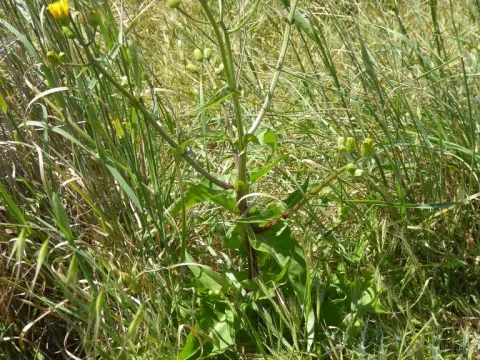
Crepis divaricata
Crepis divaricata
Crepis divaricata is a member of the Asteraceae family, recognized for its distinctively branched growth habit and yellow, daisy-like flower heads. This plant is often adapted to rugged environments, showing significant resilience to varying environmental stressors.
What the section contains
Crepis divaricata
It prefers well-drained, porous soils that prevent water stagnation near the root system. While the plant can tolerate poor nutrient levels, it thrives in soil enriched with organic matter, which supports vigorous vegetative development throughout the season.
Climatically, the species is well-suited to temperate zones where it can benefit from extended daylight hours. It demonstrates high drought tolerance once established, making it a potentially efficient species for less intensive agricultural systems.
The botanical architecture of the plant involves a basal rosette of leaves from which thin, divaricately branched stems emerge. This structure allows the plant to maximize sunlight capture for its photosynthetic requirements during the growth period.
Agricultural management should focus on maintaining adequate space between individual plants to prevent shading. Proper crop rotation is recommended to maintain soil health and minimize the buildup of soil-borne pathogens over multiple seasons.
Aphids are the most common pest observed on Crepis divaricata, particularly during the flowering phase. Managing these populations is essential to protect the vitality of the inflorescences and ensure consistent seed production.
Powdery mildew represents a primary fungal threat under conditions of high humidity and poor air circulation. Ensuring adequate spacing is the best cultural practice to reduce the likelihood of this disease spreading through the field.
Root rot can occur if soil drainage is compromised, leading to the rapid decline of individual plants. Selecting fields with a slight slope or light soil texture is crucial for mitigating this risk during the planting phase.
Leaf-eating caterpillars may occasionally cause damage to the foliage. Monitoring programs should be in place to detect infestations early, allowing for targeted interventions rather than broad-spectrum chemical applications.
Despite these potential threats, the plant is generally hardy. Integrating healthy cultural practices with regular field observation is typically sufficient to maintain a productive stand of this species throughout its life cycle.