
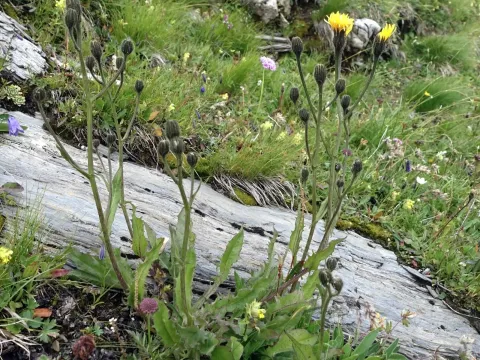
Crepis conyzifolia
Crepis conyzifolia
Crepis conyzifolia belongs to the Asteraceae family. It is a perennial herbaceous plant native to the mountainous regions of Europe, including the Alps, the Carpathians, and the Balkan Peninsula.
What the section contains
Crepis conyzifolia
The species thrives in subalpine and alpine environments. It is commonly found on open, sunny slopes, rocky screes, and alpine meadows where soil drainage is excellent and nutrient availability is adequate.
The plant exhibits high resistance to cold temperatures and extreme climate fluctuations. It is well-adapted to the short growing seasons of high altitudes and can endure prolonged periods of snow cover.
Regarding soil requirements, the plant prefers slightly acidic, well-aerated substrates. It cannot tolerate waterlogged conditions, making well-drained rocky or loamy soil essential for healthy growth.
Botanically, this species is defined by a robust root system, which secures it against the unstable terrain of slopes, and an erect stem bearing the yellow flower heads characteristic of the Crepis genus.
The primary threats to Crepis conyzifolia include fungal infections that thrive in conditions of high humidity, poor soil drainage, or stagnant air circulation around the plant base.
Potential pests include various phytophagous insects that graze on the foliage during the active vegetation stage. In natural mountain habitats, intense livestock grazing also poses a significant risk to the population.
The species may face competitive pressure from more aggressive grass species when natural ecosystems are disturbed by human activity or changes in soil nutrient content.
Adverse weather events, such as late spring frosts occurring after early snowmelt, can damage the reproductive organs, thereby reducing the plant's overall seed production capacity.
Management practices for this plant involve maintaining proper humidity levels and avoiding excessive chemical fertilizers, which can decrease the natural resistance of the plant to various soil-borne pathogens.