
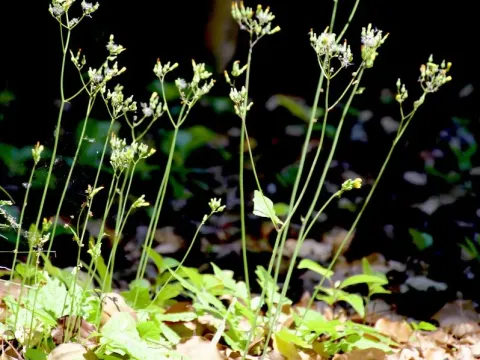
Crepis bursifolia
Crepis bursifolia
Crepis bursifolia is a member of the Asteraceae family, originating from the Mediterranean basin where it is found in diverse habitats, including meadows and rocky terrain.
What the section contains
Crepis bursifolia
The sowing period is usually set for early spring when soil temperatures reach stable levels, ensuring optimal conditions for seedling emergence and rapid biomass development.
The seeds should be sown at a shallow depth of approximately 1-2 centimeters, as deeper placement often prevents the emergence of small-seeded species like this one.
Modern agronomic practice involves using precision drills to maintain consistent row spacing, which helps in weed control and eases subsequent mechanized operations.
Seedbed preparation is vital; it should involve fine tilling to ensure that the small seeds have firm contact with the moist soil, which is essential for germination.
The species prefers well-drained, sandy-loam soils that are slightly alkaline or neutral, providing an ideal environment for its taproot system to penetrate deeper.
It thrives in temperate climatic zones with sufficient sunlight, as the plant is sensitive to low light levels which can inhibit flowering and overall plant health.
While relatively drought-tolerant, Crepis bursifolia responds well to periodic irrigation during extended dry spells, particularly during the early vegetative stage.
The plant demonstrates high adaptability to varied soil nutrients, although nitrogen application during early growth significantly boosts the protein content in forage.
It is important to avoid soils prone to waterlogging, as persistent stagnant water leads to root rot and significant stand thinning, especially during the seedling stage.
Like many species in the Asteraceae family, this crop is susceptible to powdery mildew during periods of high humidity and stagnant air, particularly in dense stands.
Aphids often pose a significant threat by clustering on young shoots, which can lead to viral infections and a general reduction in the plant's overall vigor.
Root-knot nematodes may become an issue in soils that have been used for intensive cropping without proper rotation, necessitating careful field monitoring.
Weed competition during the first three weeks of growth is the primary threat; therefore, pre-emergent control or early mechanical cultivation is essential for success.
- Monitor fields weekly for signs of leaf yellowing.
- Implement integrated pest management for aphid control.
- Practice crop rotation to minimize soil-borne pathogens.
The harvesting process for forage should be conducted during the late vegetative or early budding stage to ensure the highest quality of green matter for livestock.
For seed production, the crop should be harvested once the pappus shows signs of drying, indicating that the seeds have reached physiological maturity.
Mechanical harvesting requires sharp blades to ensure a clean cut, which promotes faster regrowth of the plant if multiple cuts are intended during a single season.
Immediate drying is crucial after harvesting; the biomass should be spread thin in the field if weather permits, or dried in controlled facilities to prevent molding.
The final yield depends on soil fertility and timing; generally, two productive harvests can be expected per year under favorable management conditions.