
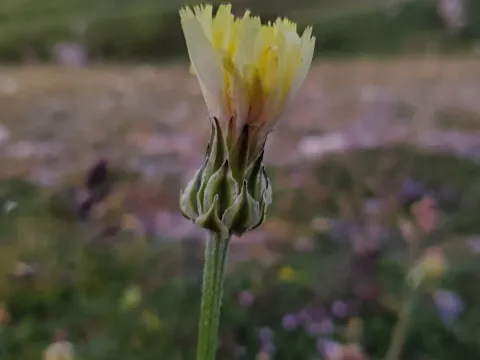
Crepis albida
Crepis albida
Crepis albida is a herbaceous perennial plant belonging to the Asteraceae family. Known for its resilience in high-altitude environments, it is primarily found in the mountain regions of Southwestern Europe, particularly within the Pyrenees range.
What the section contains
Crepis albida
The plant is naturally adapted to rugged terrain and rocky substrates. It thrives in soils with high limestone content, which provide the necessary drainage for its root system to penetrate deep into stony crevices for water and mineral access.
Climate requirements for Crepis albida involve exposure to intense solar radiation and significant temperature fluctuations common at higher elevations. It is a heliophilous species that performs best in open areas with minimal competition from dense vegetation.
Botanically, the species is distinguished by its basal leaf rosette and branched stems that support yellow flower heads. The flowering stage is critical for its life cycle, typically occurring during the short alpine summer, ensuring seed dispersal by wind.
While not a traditional agricultural crop, its ability to colonize extreme environments makes it a subject of interest in botany and ecological restoration of high-altitude habitats where other vegetation fails to establish.
The primary threats to Crepis albida in its natural habitat include climate change and shifts in alpine precipitation patterns. As a specialized plant, it struggles when lower-elevation species invade its ecological niche due to global warming.
Pathological threats involve common Asteraceae infections such as powdery mildew or rust fungi, which can stress the plant during atypically warm and humid seasons. Insect pests, including aphids and beetle larvae, may also inflict damage during the growing season.
In agricultural settings, where it may be considered a weed, management is handled through mechanical weeding and soil cultivation. Preventative measures include maintaining soil fertility and crop density to naturally outcompete the species.
Herbicide usage is generally not recommended unless there is an overwhelming infestation. Targeted mechanical removal remains the most sustainable method, preserving the integrity of the soil and surrounding ecosystems.
Further research is required to fully identify the specific pest-predator dynamics affecting Crepis albida populations. Integrated pest management strategies remain the standard approach for controlling any unwanted presence of this species in cultivated areas.