
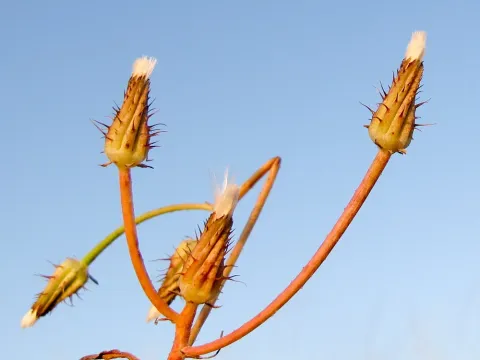
Crepis aculeata
Crepis aculeata
Crepis aculeata, commonly known as spiny hawksbeard, is an annual herbaceous plant belonging to the Asteraceae family. While primarily recognized as a wild flora component, it serves as an interesting subject in botanical studies.
What the section contains
Crepis aculeata
The species originates from the Mediterranean and Middle Eastern regions. It is highly adapted to arid environments and typically thrives in open, sunny habitats such as rocky slopes, pastures, and disturbed soil sites.
Botanically, it is defined by a basal rosette of leaves and an erect stem topped with yellow flower heads. The most notable feature is the prickly achenes, which assist in seed dispersal through mechanical attachment.
Environmental requirements include well-drained soil and high levels of solar exposure. The plant can adapt to various soil textures, including sandy and silty types, provided they do not hold excessive moisture.
Agronomic management focuses on controlling population density, often through crop rotation and regular soil tillage to suppress seed production and minimize competition with cultivated crops.
The plant can be impacted by several pathogens, with downy mildew being a common issue during periods of increased humidity, manifesting as localized chlorosis on the foliage.
Aphid infestations are frequently observed on the inflorescences, causing stunted growth and potential deformities in the developing seed heads during the late stages of development.
Weevil populations occasionally pose a threat by feeding on stem tissues, which can stress the plant and increase susceptibility to secondary bacterial or fungal invasions.
Rust diseases represent another significant threat, causing spore-producing lesions that deplete the plant's nutritional reserves and accelerate the senescence of leaves.
Effective management against these biological threats involves maintaining field hygiene and utilizing integrated pest management strategies to reduce the impact of these organisms.