
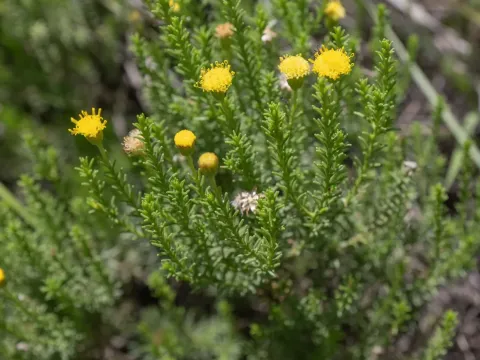
Chrysocoma
Chrysocoma
Chrysocoma is a genus of perennial plants and subshrubs belonging to the Asteraceae family. Its native range is primarily located in South Africa, where it thrives in diverse environments.
What the section contains


Chrysocoma
The plant is known for its remarkable drought tolerance, making it an excellent candidate for xeriscaping or low-water gardening projects in suitable climates.
Botanically, Chrysocoma features small, slender leaves and characteristic bright yellow flower heads. These golden, globular inflorescences lack ray florets, giving them a distinct aesthetic appearance.
For successful cultivation, the plants require full sun exposure and well-draining, sandy or gravelly soil conditions to mimic their natural habitat.
In temperate zones, it is often grown as an ornamental container plant as it cannot survive frost, necessitating protection or wintering indoors.
The main threats to Chrysocoma health involve fungal infections caused by overwatering or poorly aerated soil conditions, leading to root rot.
Pests such as spider mites and aphids are known to occasionally infest the foliage, particularly when the plants are grown in confined or stagnant indoor environments.
Proper airflow is a critical factor in preventing the development of powdery mildew and other common fungal leaf diseases in these plants.
Regular maintenance, including deadheading spent flowers, helps in redirecting the plant's energy and reduces the risk of tissue decay.
Integrated pest management strategies, such as using horticultural oils or soaps, are generally effective in controlling common infestations without harming the plant.