
Chrysocoma ciliata
Chrysocoma ciliata
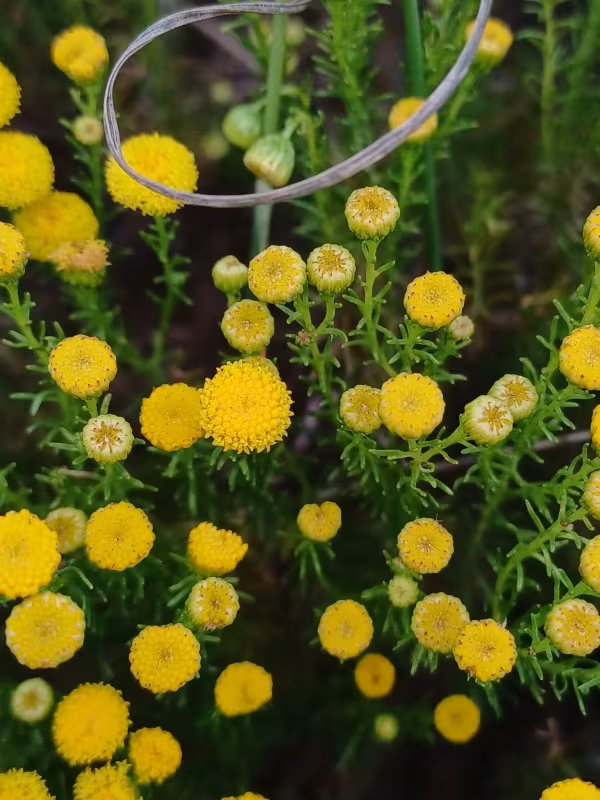
Description
Growing requirements
Chrysocoma ciliata is a resilient perennial subshrub belonging to the Asteraceae family. Native to the arid and semi-arid regions of Southern Africa, this plant has evolved to thrive in environments where water availability is minimal.
The plant demonstrates remarkable drought tolerance, making it an excellent candidate for xeriscaping and sustainable planting projects. It typically grows in rocky or sandy soils, showing high adaptability to nutrient-poor substrates.
To ensure healthy growth, the plant requires excellent soil drainage. Waterlogged conditions can lead to rapid root rot and overall decline of the shrub, so selecting an elevated or well-drained planting site is critical.
Full sun exposure is essential for the plant to maintain its characteristic compact form and vibrant yellow flower heads. It thrives in high-light environments and is highly resistant to heat stress and intensive solar radiation.
Regarding soil chemistry, the plant prefers neutral to slightly alkaline pH levels. While it does not require significant fertilization, light applications of potassium-based fertilizers can support robust growth during the establishment phase.
Main diseases and pests
Fungal pathogens represent the primary threat to the health of Chrysocoma ciliata, particularly during periods of high humidity or poor airflow. Regular pruning to improve air circulation within the shrub canopy is highly recommended.
Pests such as aphids and spider mites can colonize the soft tips of new growth. These pests often appear during periods of drought, necessitating close monitoring and the application of suitable horticultural soaps or insecticides if infestations occur.
Root rot, primarily caused by water stagnation, is a lethal factor that can destroy entire plantings if the drainage conditions are not maintained. Proper irrigation scheduling is the most effective management strategy.
Nematode infestations can occur, particularly in soils that have been used for related crops previously. Soil solarization or the use of clean planting stock is vital to avoid long-term damage to the crop.
Wildlife and rodent damage can occur in specific habitats; installing physical barriers in the early stages of plant establishment is a proven method to reduce losses during the critical growth period.