
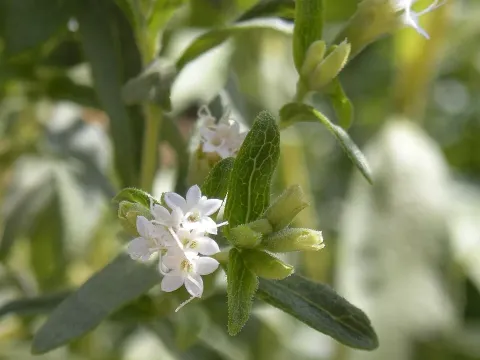
Stevia collina
Stevia collina
Stevia collina is a perennial herbaceous plant belonging to the Asteraceae family. In agricultural practices, it is typically propagated through seedlings to ensure uniform crop development and higher survival rates in the field.
What the section contains
Stevia collina
Seed sowing begins in late winter, approximately 8 to 10 weeks before the expected last frost date. The seeds are extremely small and light-sensitive, so they should be sown on the surface of a high-quality, moist substrate without being covered with soil.
The germination process requires constant moisture and a temperature range of +22°C to +25°C. Providing supplemental lighting is crucial during the seedling stage to ensure the plants remain compact and develop strong root systems before transplantation.
Pricking out the seedlings into individual containers is performed once the plants develop two pairs of true leaves. This step helps in managing the root architecture and prepares the plants for the transition to the field environment.
Transplanting into the open field is done once the soil temperature is consistently above +15°C. Careful hardening off, by gradually exposing the plants to outdoor conditions over a week, significantly improves field establishment and stress tolerance.
Stevia collina thrives in locations with full sunlight. High light intensity is a critical factor, as it directly influences the biosynthesis of steviol glycosides, which are the main secondary metabolites of economic interest in this species.
The ideal soil for cultivation is well-drained, sandy loam with a neutral pH between 6.0 and 7.0. Heavy, clay-rich soils should be avoided or amended with organic matter to improve aeration and prevent root asphyxiation during wet periods.
Water management is paramount; the crop requires consistent moisture but is highly susceptible to root rot in waterlogged conditions. Drip irrigation is the most recommended method to maintain soil moisture without wetting the foliage.
Nutrient requirements involve a balanced approach with moderate nitrogen applications for vegetative growth and increased potassium levels before the flowering stage to maximize the quality and flavor profile of the leaves.
Protection from strong winds is necessary to prevent mechanical damage to the stems. Establishing windbreaks or using protective covers in early development stages can prove beneficial for plant longevity and total yield production.
The total yield of Stevia collina is determined by the number of harvesting cycles per growing season. A well-managed plantation can provide multiple cuts, significantly boosting the annual output of dry leaf material.
Harvesting is typically timed to coincide with the onset of flowering. At this biological stage, the concentration of active sweetening components is at its peak, providing the highest value for pharmaceutical and food industries.
After the harvest, the plants possess the capacity for rapid regrowth from the crown. If managed correctly, the second harvest can be obtained after approximately 40 to 60 days, depending on the ambient temperature and irrigation schedule.
Drying is a critical post-harvest process. The leaves should be dried in shaded, well-ventilated conditions at temperatures not exceeding +50°C to preserve the integrity of the glycosides and prevent the degradation of taste profiles.
Proper record-keeping of yield per hectare allows farmers to monitor soil fertility and plant health over several years, ensuring that the plantation remains productive and economically viable for as long as possible.
The primary threats to Stevia collina include fungal diseases such as leaf spot and root rot, which are often exacerbated by poor air circulation and excessive soil humidity. Maintaining proper row spacing is a key preventative measure.
Pests like aphids and spider mites can cause significant damage during hot, dry spells. Integrated pest management strategies, focusing on biological controls and predatory insects, are preferred to maintain the quality of the raw material.
Weed competition is a major challenge during the early stages of growth, as the crop lacks initial vigor. Mechanical cultivation and manual weeding are essential to prevent weeds from outcompeting the young stevia plants for light and nutrients.
Environmental stress, particularly sudden cold fronts, can lead to plant mortality. In regions with harsh winters, protection measures or annual rotation strategies are necessary to avoid losing the entire crop during the dormant season.
Monitoring for viral infections is also important, as these can stunt growth and reduce the quality of the foliage. Using certified disease-free seedlings is the most effective way to prevent the introduction of pathogens to the field.