
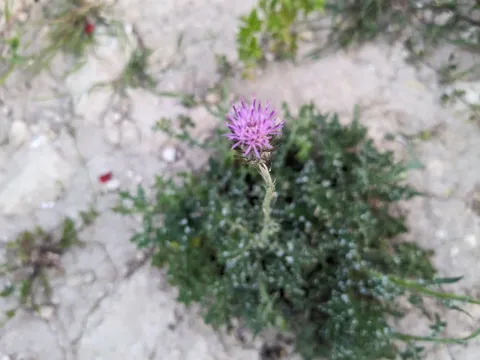
Silver thistle
Carduus argentatus
Silver thistle is a biennial herb belonging to the Asteraceae family. Seeds should be sown in late autumn or early spring once soil temperatures reach 5-8 degrees Celsius.
What the section contains
Silver thistle
For uniform germination, the seeds require a period of stratification, making autumn planting a preferred method for better field emergence.
Seeds should be planted at a depth of 1.5 to 2 centimeters, ensuring firm soil contact to facilitate proper moisture absorption.
Row spacing should be maintained at 60–70 centimeters to accommodate the large rosette of leaves and the future flower stalk development.
Seedlings typically emerge within two to three weeks, provided that the soil surface remains consistently moist during the critical early stages.
The plant thrives in open, sunny locations with light, well-drained soils that are rich in calcium, avoiding damp or waterlogged areas.
Silver thistle is exceptionally drought-tolerant due to its deep taproot, which allows it to access water reserves in deeper soil layers.
The soil pH should ideally be neutral or slightly alkaline, as the plant shows poor development in highly acidic soil conditions.
It is well-adapted to steppe environments and shows high resilience against the harsh, fluctuating temperatures typical of open plains.
Proper soil aeration is crucial; therefore, light harrowing may be necessary in the spring to promote better crop vigor.
Silver thistle is cultivated for its medicinal properties and serves as a vital late-season nectar source for pollinators.
The yield of green biomass can reach up to 150-200 centners per hectare, making it a viable crop for secondary pharmaceutical production.
Seed productivity is very high, allowing for rapid crop establishment and high reproductive success in agricultural settings.
Active compounds extracted from the leaves and flower heads are increasingly used in the development of specialized herbal supplements.
Optimal harvest timing ensures the highest concentration of bioactive flavonoids, which significantly increases the economic value of the yield.
Young plants are particularly vulnerable to wireworms, which can severely damage the root systems during the initial rosette growth phase.
In high humidity conditions, the crop may suffer from powdery mildew, manifesting as a white fungal layer on the foliage.
Aphid infestations are common during the budding stage, which can weaken the plant and negatively impact the quality of the flowers.
Rust fungus may appear later in the growing season, causing dark lesions on the leaves that reduce overall photosynthetic efficiency.
Integrated pest management strategies are recommended to monitor the health of the field and address potential issues before they cause widespread damage.
Harvesting for medicinal purposes should occur during the peak of the flowering stage when the plant is most metabolically active.
For seed production, the flower heads must be collected once they show signs of browning to prevent natural dispersal by wind.
The harvested material must be dried in a shaded, well-ventilated area to maintain the integrity of the bioactive chemical components.
Proper storage in dry, cool conditions is essential to protect the dried product from mold and loss of nutritional or medicinal quality.
Storage facilities should be kept at low humidity levels to ensure the crop remains in prime condition for long-term industrial processing.