
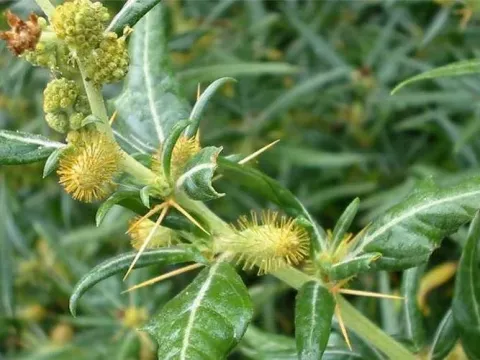
Silver cocklebur
Xanthium argenteum
Silver cocklebur, a member of the Asteraceae family, is a thermophilic plant that requires specific temperature conditions to ensure successful germination of seeds.
What the section contains
Silver cocklebur
Sowing should be delayed until late spring when the soil temperature at a depth of 10 centimeters consistently stays above 15 degrees Celsius.
Seeds are typically sown at a depth of 3 to 5 centimeters, depending on the soil texture, to ensure they remain moist while being able to emerge easily.
For commercial cultivation, wide-row sowing is recommended to facilitate the use of mechanical equipment for weed control and inter-row cultivation.
Ensuring proper seedbed preparation, including leveling and soil compaction, is crucial for achieving uniform plant emergence across the field.
This plant thrives in full sun, making exposure to direct light a primary requirement for reaching its full potential in biomass production and flowering.
Well-drained sandy or loamy soils with a neutral pH provide the best environment for the root system, preventing issues related to waterlogging and decay.
While the plant is known for its tolerance to brief dry spells, consistent soil moisture during the initial vegetative stage is vital for rapid growth.
The site selection should prioritize areas that do not retain excess water, as heavy clay soils can lead to restricted root respiration and poor plant vigor.
Regular agricultural practices, including cultivation of the soil surface to break up crusts, help in improving aeration and moisture retention for the crop.
The total yield of silver cocklebur is highly dependent on the quality of agricultural inputs, especially nitrogen-based fertilizers applied during the growing season.
Under optimal management conditions, the crop produces a significant amount of biomass which can be harvested for industrial or botanical research purposes.
Seed yield varies significantly based on the plant's branching structure, which can be improved through strategic spacing and proper nutrition management.
The economic viability of the crop depends on maintaining high standards during harvest to ensure that the quality of the raw material meets industrial requirements.
Integrated farm management, including timely weeding and nutrient application, allows for a consistent yield year after year in suitable climates.
Common diseases affecting the plant include powdery mildew, which can significantly reduce photosynthetic capacity if environmental conditions remain humid.
Insect pests such as aphids and various leaf-feeding beetles pose a threat to the vegetative parts, potentially stunting growth if left uncontrolled.
Fungal leaf spots can also occur in dense plantations where airflow is restricted, highlighting the need for proper plant density and spacing strategies.
Crop protection programs should focus on preventive measures, such as selecting resistant varieties and following strict crop rotation schedules.
If chemical interventions are necessary, they must be applied according to local regulations to avoid contamination of the harvested plant parts.
Harvesting for biomass should be timed with the peak flowering period to ensure that the chemical profile of the plant is at its highest concentration.
For seed collection, it is essential to wait until full maturity when the seed pods have hardened and turned a distinct brown color.
Post-harvest processing involves immediate drying in well-ventilated areas to prevent fungal development and the degradation of active biological compounds.
The use of specialized harvesting equipment helps in minimizing losses while managing the spines on the seed pods, which can complicate manual handling.
Once dried, the crop should be cleaned to remove debris and soil before it is processed or stored in a controlled environment to maintain quality.