
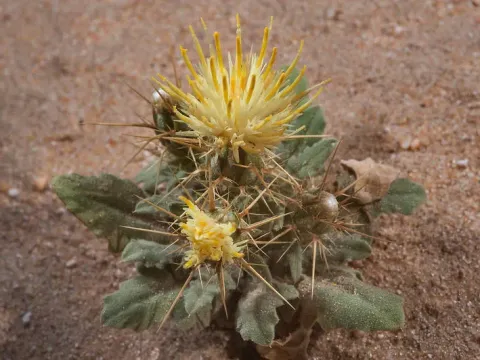
Sinai cornflower
Centaurea sinaica
Sinai cornflower (Centaurea sinaica) belongs to the Asteraceae family. It is a herbaceous plant adapted to the extreme conditions of arid zones, making it highly resistant to moisture deficits and harsh environmental pressures.
What the section contains
Sinai cornflower
The species originates from the Middle East, primarily found in the Sinai Peninsula and surrounding desert regions. In its natural habitat, the plant grows on rocky soils and sandy substrates typical of desert climates, demonstrating remarkable evolutionary success.
Botanically, the culture is a subshrub or a herbaceous perennial with characteristic grayish pubescence on the leaves, which helps to significantly reduce transpiration. The flowers are gathered into typical cornflower heads, which are pale in color and serve as a vital resource for pollinators.
For successful cultivation, the plant requires well-drained, sandy, or loamy soils with low humus content. A crucial factor is ensuring maximum solar exposure, as even slight shading can cause the shoots to elongate excessively and reduce the overall vitality of the crop.
The agronomy of this plant involves minimal irrigation, as it is extremely sensitive to waterlogging in the root zone. On an industrial scale, this species is viewed primarily as a promising raw material for pharmacology or as a component of specialized landscape projects for greening arid territories.