
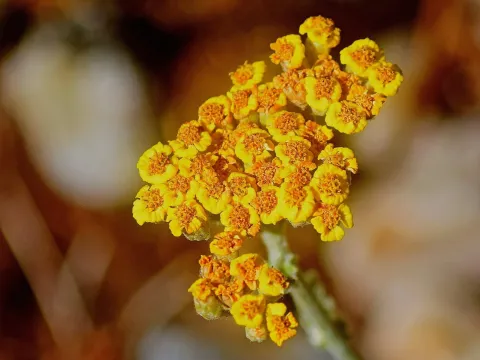
Silky yarrow
Achillea holosericea
The sowing of Silky yarrow is typically conducted in spring once soil temperatures reach 10–12 degrees Celsius. For nursery production, seeds are sown in greenhouses during March, which significantly accelerates the germination phase and ensures stronger initial development.
What the section contains
Silky yarrow
When sowing directly into open fields, it is crucial to maintain row spacing of 40–50 centimeters to allow adequate room for root system expansion. The seeds should be covered with a very thin layer of soil, no more than 0.5–1 centimeter, to ensure they receive enough light for optimal emergence.
Preparing the seedbed involves thorough weeding and soil aeration to prevent competition during the delicate early growth stages. Under consistent moisture conditions, seedlings usually emerge within 10 to 14 days after planting.
Large-scale commercial production often utilizes late-autumn sowing, which facilitates early emergence during the following spring. However, this method requires careful monitoring of soil moisture to prevent premature germination during minor winter warm spells.
A seeding rate of approximately 1–1.5 kilograms per hectare is generally sufficient, assuming high-quality seed material. Strict adherence to planting depth and timing is essential for establishing an even and productive plant population.
Silky yarrow, a member of the Asteraceae family, is a sun-loving crop that thrives in open areas with high solar exposure. The species is highly adaptable and can grow in various soil types, including rocky or nutritionally poor environments.
The ideal conditions for cultivation are light sandy or loamy soils with a neutral or slightly alkaline pH. Good drainage is paramount, as water stagnation during winter can cause root rot and compromise the longevity of the perennial plants.
The crop is highly drought-tolerant, although moderate irrigation during the active growing season significantly enhances biomass production. It is well-adapted to temperature fluctuations, making it suitable for cultivation in mountainous regions.
Mineral requirements are moderate; applying phosphorus and potassium fertilizers during the budding phase effectively boosts the synthesis of essential oils. Excessive nitrogen should be avoided to prevent over-vigorous vegetative growth that diminishes floral quality.
Cultural practices include regular inter-row cultivation to improve soil aeration and manage weed populations. As the plants mature and the canopy closes, the competitive pressure on weeds naturally decreases.
The yield of above-ground biomass for Silky yarrow typically ranges from 15 to 25 centners of dry matter per hectare. These figures fluctuate based on the age of the plantation and the consistency of agronomic practices throughout the growth cycle.
In the first year of production, yields are generally lower as the plants prioritize root and foliage development. Starting from the second year, with proper management, the plantation can provide stable, high yields for a period of 4 to 6 years.
For pharmaceutical purposes, harvesting is conducted during the peak flowering phase when active compound concentrations are highest. The yield of floral material alone can reach 5–8 centners of dry product per hectare.
Limiting factors for yield include planting density and the timeliness of agronomic operations. Overcrowding can negatively impact the development and vigor of individual plants, leading to a decrease in overall harvest quality.
The implementation of modern drip irrigation systems and the selection of high-performance varieties can enhance productivity by up to 30 percent compared to conventional, low-input farming methods.
Silky yarrow is inherently resistant to most diseases affecting the Asteraceae family. However, high humidity levels may lead to outbreaks of powdery mildew, necessitating careful ventilation and management of plant spacing to maintain airflow.
Pests such as aphids and certain species of leafrollers can damage floral parts, requiring diligent monitoring during the flowering period. When pest thresholds are exceeded, targeted biological controls are the preferred management strategy.
Rust infections may occur if crop rotation is neglected or if wild relatives are present in close proximity. Maintaining spatial isolation from wild yarrow populations is an effective preventive measure against such pathogens.
Root rot is typically associated with waterlogged conditions, underscoring the importance of selecting well-drained sites. Any plants showing symptoms of systemic rot must be removed immediately to prevent local spread.
Weed management during the initial growth stages is vital, as persistent weeds can act as disease vectors. Mulching the plantation can help suppress weed growth while maintaining favorable soil conditions.
Harvesting is performed mechanically using specialized equipment set to a cutting height of 10–15 centimeters above the ground. This preserves the basal buds, ensuring the plant can regenerate for future cuts.
Timing the harvest to coincide with mass flowering is essential for ensuring the highest quality of active ingredients in the raw material. Ideal conditions for harvesting are dry and sunny days to prevent moisture-related degradation during transport.
Post-harvest, the biomass should be transported to drying facilities without delay to minimize undesirable fermentation. Drying temperatures should be strictly controlled and kept below 50 degrees Celsius to preserve volatile essential oils.
Convection drying systems allow for precise control over moisture removal, preventing overheating and product damage. Once dried, the herb should be cleaned of impurities and foreign debris before packaging.
Storage in cool, dark, and well-ventilated areas ensures the potency of the medicinal herb is maintained for up to two years. Proper packaging materials that allow for breathability are crucial for long-term product stability.