
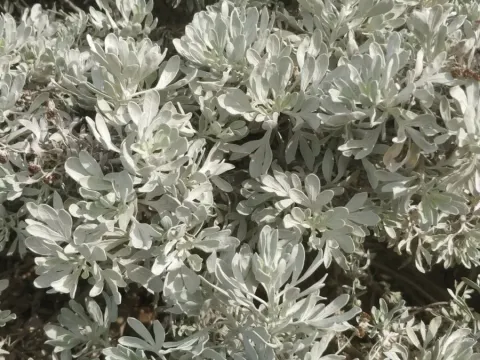
Silver wormwood
Artemisia argentea
Silver wormwood is propagated primarily through seeds or division of established clumps, which is best done during the dormant season.
What the section contains
Silver wormwood
When sowing seeds, it is critical to use a well-draining, sterile potting mix and provide plenty of light to ensure strong, compact growth.
Seeds should be surface-sown, as they require light to germinate effectively, and pressed gently into the substrate without covering.
For outdoor planting, seeds can be sown in late autumn to allow for natural stratification, which helps improve germination rates in spring.
Spacing is essential for the health of the plant; maintaining at least 45 centimeters between specimens promotes airflow and prevents fungal issues.
Artemisia argentea, a member of the Asteraceae family, originates from the island of Madeira, thriving in volcanic and rocky soils.
This plant demands full sun exposure to maintain its characteristic metallic silver sheen and compact, shrub-like growth habit.
Soil requirements are strict: the medium must be sandy, gritty, or rocky to ensure rapid water drainage away from the crown.
It is exceptionally drought-tolerant once established and will suffer in soils that remain moist or contain heavy clay content.
Fertilization should be kept to an absolute minimum, as rich soils cause the plant to become leggy and lose its unique aesthetic qualities.
Due to the presence of potent volatile oils, silver wormwood is remarkably resistant to most common garden pests and herbivores.
The most significant threat is root rot, which occurs when plants are subjected to excessive moisture during cool or humid seasons.
Powdery mildew can occasionally affect the foliage if there is poor air circulation or extended periods of high humidity in the environment.
Aphids may occasionally appear on tender new growth, but they are generally easy to manage without the need for systemic pesticides.
Preventative care involves planting in raised beds or on slopes to ensure that water drains away from the root system effectively.
Harvesting for dried floral arrangements should occur at the peak of the growing season when the foliage is most vibrant and silvery.
Stems should be cut in the morning after the dew has evaporated and hung upside down in a dark, airy place to preserve the foliage color.
In landscaping, it is used extensively for its architectural form and as a neutral color element to contrast with vibrant flowering perennials.
Beyond decoration, the plant is valued for its hardiness in xeriscape designs, making it a sustainable choice for water-restricted gardens.
The aromatic properties of the leaves remain potent even after drying, making them a popular choice for traditional herbal crafts and potpourri.