
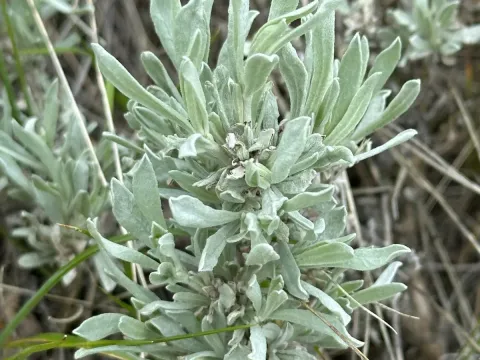
Silver sagebrush
Artemisia cana
Silver sagebrush (Artemisia cana) is a perennial semi-shrub belonging to the Asteraceae family. Native to the plains and foothills of North America, this species is highly valued for its role in supporting diverse grassland ecosystems and providing critical habitat for wildlife.
What the section contains
Silver sagebrush
The plant demonstrates remarkable adaptation to semi-arid environments, thriving in well-drained loamy, sandy, or stony soils. It is particularly known for its tolerance to alkalinity and its ability to withstand prolonged drought conditions without irrigation.
Botanic growth involves a woody, branching base with narrow, silvery-gray leaves covered in fine hairs that minimize water loss. The plant develops a deep, extensive root system, which allows it to access subsoil moisture during the driest months of the year.
Regarding agrotechnical management, silver sagebrush requires full sun exposure for optimal growth and high volatile oil production. It is considered a low-maintenance crop, often used in large-scale rangeland restoration projects where minimal intervention is required.
Hostile terrain reclamation and soil erosion control are the primary agricultural uses for this species. Its ability to stabilize loose soil with its roots makes it a superior choice for revegetation of disturbed lands or former mining sites.
Root rot is the most significant threat to silver sagebrush when planted in heavy, clay-rich, or poorly drained soils. The resulting lack of oxygen in the root zone promotes the development of soil-borne fungi that can cause rapid plant decline.
Insects such as sagebrush defoliators and certain beetles can cause localized damage to foliage. In natural habitats, these populations are usually controlled by natural predators, but in agricultural plantings, they may require careful monitoring to prevent outbreaks.
Powdery mildew is a common fungal threat during seasons with high humidity and stagnant air. The white mycelial growth on the leaves reduces photosynthetic efficiency and can lead to weakened plants more susceptible to secondary stressors.
Rust infections, appearing as yellow or brown pustules on leaves, can occur when plants are spaced too closely together. Proper ventilation and selecting sites with good air movement are crucial for maintaining the health of the crop.
Root-knot nematodes can weaken the plant by feeding on the root tips, especially in sandy soil conditions. To prevent potential infestations, farmers should prioritize healthy, pathogen-free planting stock and utilize sustainable soil management practices.