
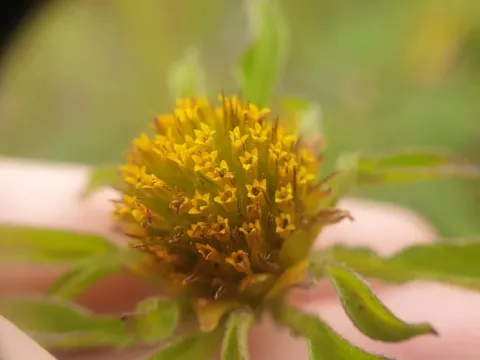
Devil's beggartick
Bidens vulgata
Bidens vulgata, commonly known as devil's beggartick, is an annual herbaceous plant belonging to the Asteraceae family. It is typically found in moist environments, including riverbanks, wetlands, and damp ditches across the Northern Hemisphere.
What the section contains
Devil's beggartick
The plant features a robust root system and a branched stem that can reach heights of over one meter. Its leaves are pinnately divided and deep green, which supports efficient photosynthesis and biomass accumulation throughout the growing season.
To thrive, this species requires fertile, moist soils with high water retention capacity. While it can adapt to various conditions, it is most productive in sunny locations with consistent soil moisture levels, making it a reliable choice for humid landscapes.
The plant is highly adaptable to climate fluctuations within its range, though it remains sensitive to prolonged, severe drought. Adequate rainfall or supplemental irrigation is recommended for commercial cultivation to maximize yield.
Botanically, it is known for its yellow flower heads that produce seeds equipped with barbed awns. These adaptations allow the seeds to cling to animals and surfaces, facilitating rapid dispersal across various ecological niches.
Sowing of Bidens vulgata is generally performed in early spring as soon as the soil becomes workable. Autumn sowing is also an option, as the seeds benefit from cold stratification to enhance germination rates.
For agricultural purposes, planting in rows with 45–60 cm spacing is recommended. This setup facilitates mechanical weed control and ensures that each plant receives sufficient light and soil nutrients for optimal growth.
Seeds should be sown at a shallow depth of 1–2 cm. Good soil-to-seed contact is essential for successful germination; thus, firming the soil lightly after sowing is a common practice in field cultivation.
Pre-planting soil preparation should involve plowing and harrowing to create a fine, loose seedbed. Since this plant dislikes soil compaction, ensuring a friable texture is crucial for root development and nutrient uptake.
Seeding rates are adjusted based on seed viability and the intended density of the crop. A balanced density helps prevent overcrowding, which could otherwise lead to competition and reduced vigor in individual plants.
Yields of dried aerial biomass can range from 1.5 to 2 tonnes per hectare under favorable management practices. The harvest timing is critical and should coincide with the early budding stage before significant seed development.
Fertilization with balanced NPK nutrients can boost biomass production, although nitrogen applications should be carefully managed to maintain the phytochemical quality of the medicinal plant material.
Effective weed suppression is essential during the early stages of growth, as the plant grows slowly initially. Once the canopy closes, the culture becomes more competitive against unwanted vegetation.
Post-harvest processing involves drying the plant material in shaded, well-ventilated areas or in industrial driers at temperatures not exceeding 40°C to preserve active compounds and color.
The resulting herbal product is evaluated based on its phytochemical profile, specifically the concentration of flavonoids and tannins, which are valued in pharmacological applications.
Fungal diseases, such as powdery mildew, are the primary threats during wet seasons or in environments with poor air circulation. Proper spacing and crop rotation help mitigate these risks significantly.
Insect pests, including aphids and leaf-eating beetles, can cause localized damage to the foliage. Monitoring programs are essential to detect infestations early and implement sustainable control measures.
Root rot may occur in soils with poor drainage. Ensuring that fields are well-drained and avoiding waterlogging is a fundamental practice to maintain crop health throughout the growing cycle.
Early-season weed competition remains the most significant threat to establishing a high-yielding crop. Timely mechanical cultivation is necessary to keep the fields clear until the plants mature.
Viruses transmitted by pests can also impact productivity, making integrated pest management (IPM) a vital component of the cultivation strategy for this species.
Mechanical harvesting is typically carried out using specialized forage mowers. The cutting height is set to 10–15 cm to avoid gathering the woody, less active lower portions of the plant stems.
Harvesting should occur on dry, sunny days to prevent moisture from compromising the quality of the raw material. Avoiding morning dew is important to reduce the risk of spoilage during the drying phase.
Once harvested, the material must be transported to processing facilities immediately. Prolonged storage in piles can lead to heating, fermentation, and the degradation of valuable biological compounds.
Storage of the finished product requires a dry, cool, and airy environment. Proper packaging prevents moisture uptake and protects the dried herb from environmental contaminants.
Final cleaning of the raw material ensures it meets industry standards, providing high-quality medicinal herbs for subsequent use in extract production and other applications.