
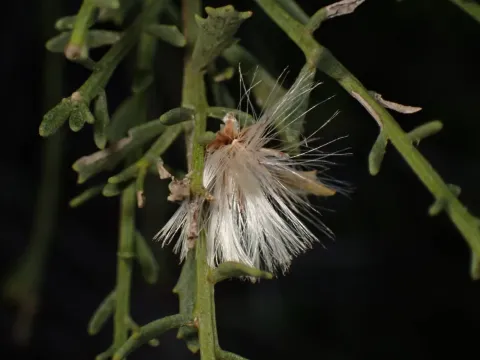
Desert broom
Baccharis sarothroides
Desert broom, scientifically known as Baccharis sarothroides, is a hardy perennial shrub belonging to the Asteraceae family. It is widely recognized for its broom-like appearance and its exceptional ability to thrive in harsh, arid environments.
What the section contains
Desert broom
Native to the southwestern United States and northwestern Mexico, this plant is a staple in xeriscaping and soil erosion control projects. It is highly adapted to sandy soils and intense solar radiation, making it an ideal choice for dry regions.
The plant requires well-drained, sandy or gravelly soil substrates to flourish. Poor drainage leads to root suffocation and disease, which are the primary limiting factors for the successful growth of this species in cultivated landscapes.
In terms of climate, it is remarkably heat-tolerant and drought-resistant. Once the root system is established, it requires little to no supplemental irrigation, as it is physiologically equipped to survive long periods without rainfall.
Agronomic management involves selecting sunny sites with excellent airflow. Due to its natural vigor, it often requires no fertilization, as it is capable of extracting necessary nutrients from relatively infertile desert soils.
While Baccharis sarothroides is highly resilient, it is susceptible to root rot caused by Phytophthora species if the soil remains waterlogged. Avoiding excessive moisture is the best preventative measure against such infections.
Insects are generally not a major concern due to the plant's chemical defenses. However, in specific microclimates, aphids or scale insects may occasionally infest younger, more succulent branches if the plant is stressed.
Powdery mildew can occur if the humidity remains consistently high or if plants are crowded together without proper air circulation. Maintaining adequate spacing between bushes is essential to prevent these fungal outbreaks.
Weed management is mainly required during the early establishment phase. Once the plant has developed a deep root system, its ability to compete for resources often makes it the dominant species in the immediate area.
Pruning should be done judiciously and only in dry conditions. Excessive or improper cutting can lead to tissue damage that attracts opportunistic pathogens, reducing the overall lifespan and aesthetic quality of the shrub.