
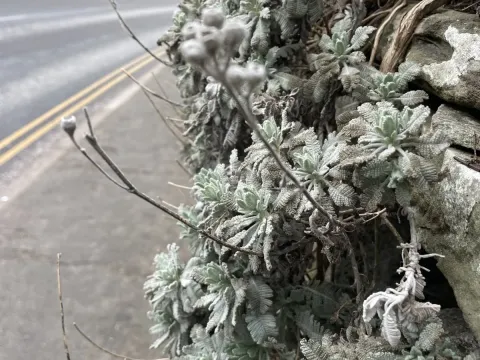
Dense tansy
Tanacetum densum
Dense tansy (Tanacetum densum) belongs to the Asteraceae family. It is a hardy perennial native to the mountainous regions of Turkey, adapted to surviving in harsh, rocky environments with limited resources.
What the section contains
Dense tansy
The plant is highly valued for its silver-gray, finely dissected foliage that forms a low, dense mat. During the summer, it produces bright yellow flower heads that contrast beautifully with the silvery leaves.
This species requires full sun exposure to maintain its compact growth habit and vibrant leaf color. Planting in partial shade usually results in weak, spindly stems and loss of the characteristic silver tone.
Regarding soil requirements, the plant thrives in well-drained, sandy, or stony substrates. It is extremely drought-tolerant once established and does not require rich or heavily amended garden soils.
In landscaping, it is used for rock gardens, xeric borders, and ground cover applications. Its resistance to heat and dry conditions makes it an excellent choice for low-maintenance horticultural projects.
The primary concern for Tanacetum densum is excessive moisture and poor drainage. Waterlogged soil during the winter or rainy seasons often leads to root rot, which is the most frequent cause of plant mortality.
Powdery mildew may occur if air circulation is insufficient. To mitigate this risk, gardeners should ensure that plants are spaced appropriately and that the planting site has good natural airflow.
Pests such as aphids and spider mites can occasionally attack the tender parts of the plant during hot, dry spells. Monitoring is advised, and intervention with insecticidal soaps is usually sufficient for control.
Nematodes can sometimes be an issue in sandy soils, so site selection and clearing the area of potential host plants before cultivation is a recommended proactive agricultural practice.
Overall, providing the correct soil structure and site location minimizes the need for pesticides. Good sanitation, such as removing dead flower heads, contributes to the overall vigor and disease resistance of the plant.