
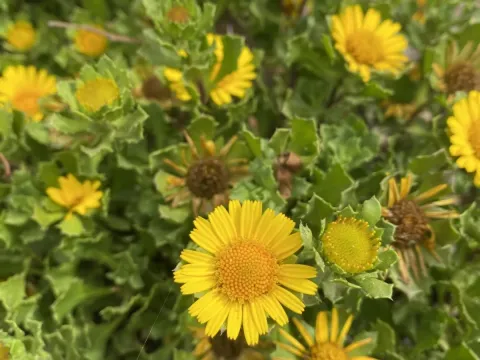
Asteriscus imbricatus
Asteriscus imbricatus
Asteriscus imbricatus is a distinct species belonging to the Asteraceae family. Originating from the Canary Islands, this plant is well-adapted to maritime climates and volcanic soils.
What the section contains
Asteriscus imbricatus
Botanically, it is classified as a small, woody subshrub. It is characterized by its silvery-green, pubescent foliage and striking yellow ray florets that provide a continuous bloom throughout the growing season.
In terms of cultivation, this species requires full sun exposure to maintain its compact shape and intense flowering. It thrives in poor, rocky, or sandy soil types that provide excellent aeration and drainage.
The plant demonstrates significant drought tolerance once established. Minimal irrigation is required during the growing phase, as the plant possesses specialized adaptations to survive in nutrient-poor and dry environments.
In agricultural and ornamental contexts, it serves as an excellent ground cover for xeriscaping. Its ability to tolerate salty sea breezes makes it a favored choice for coastal landscaping projects.
The primary threats to Asteriscus imbricatus are fungal infections such as root rot or Botrytis blight, which are almost exclusively triggered by overwatering or poor drainage conditions.
Pests such as aphids and spider mites are common concerns. Aphids typically congregate on new vegetative growth, while spider mites exploit dry, warm conditions to feed on cell sap.
Management strategies focus on proper spacing and air circulation. Avoiding overhead irrigation is a critical preventive measure to keep the foliage dry and reduce the risk of pathogen outbreaks.
Integrated pest management (IPM) practices, including the use of neem oil or insecticidal soaps, are recommended when infestations are detected. Chemical controls should be used sparingly.
Monitoring the plant health involves regular checks for yellowing leaves, which often indicate improper soil moisture levels or poor light exposure, rather than primary pest attacks.