
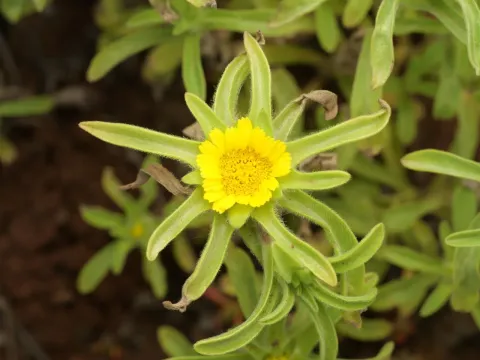
Asteriscus aquaticus
Asteriscus aquaticus
Asteriscus aquaticus is an annual herbaceous plant that requires careful timing for successful establishment. In temperate regions, sowing should commence in early spring once soil temperatures reach a consistent 12–15 degrees Celsius.
What the section contains
Asteriscus aquaticus
Optimal germination occurs when seeds are sown in well-drained, porous soil. The seedbed should be finely prepared, and seeds should be covered with a light layer of soil, approximately 1–2 centimeters deep, to facilitate uniform emergence.
Row spacing is essential for air circulation, which prevents the development of fungal diseases. A distance of 30–40 centimeters between rows is recommended to provide sufficient space for plants to develop their root systems and branches.
Moisture control immediately after sowing is crucial. The soil must be kept consistently moist but not saturated, as waterlogged conditions can inhibit germination and lead to seed rot in the soil.
Seedlings typically emerge within two weeks. Once established, the plants demonstrate robust initial growth, which allows them to outcompete emerging weeds if the planting density was managed correctly at the sowing stage.
As a member of the Asteraceae family, Asteriscus aquaticus thrives in open, sunny environments. Exposure to direct sunlight is mandatory for optimal blooming and the production of healthy vegetative mass throughout the season.
The crop prefers sandy or loamy soils that provide excellent drainage. A neutral to slightly alkaline soil pH is ideal for nutrient uptake, ensuring the plant reaches its full potential during the growing cycle.
While the plant exhibits moderate drought tolerance, consistent moisture during the vegetative phase significantly improves yield. Irrigation systems should be calibrated to maintain soil moisture without causing root saturation.
The ideal temperature range for growth is between 20 and 28 degrees Celsius. Excessive heat may trigger premature flowering, which could potentially reduce the overall size of the harvested product.
Regular soil cultivation, such as light hoeing between rows, is necessary to improve aeration and moisture retention. This practice helps maintain a healthy root zone, which is vital for the plant's overall productivity.
The yield of Asteriscus aquaticus is primarily determined by the quality of flower production. In agricultural settings, producers focus on maximizing the number of blossoms per plant through proper fertilization and spacing.
Strategic use of phosphorus-based fertilizers can significantly boost flower head count. Maintaining soil fertility is key, as the plant depletes soil nutrients rapidly during the intense blooming phase.
Harvesting for commercial use involves gathering the blossoms at the peak of their opening. Early morning harvest is standard practice to ensure the highest quality and longevity of the harvested flowers.
The biological capacity of this species allows for high-density planting, which can significantly enhance the total yield per hectare. Proper selection of planting sites and soil preparation are the primary drivers of yield efficiency.
Though an annual, well-managed Asteriscus aquaticus crops provide consistent and reliable harvests, making them a profitable choice for small-scale specialty farming or decorative flower production.
The most common threats to Asteriscus aquaticus are fungal infections such as powdery mildew. These are often caused by high humidity and poor ventilation within the crop canopy, necessitating proactive management.
Aphids are the primary insect pests affecting this plant. They tend to congregate on young shoots and buds, causing stunted growth. Integrated pest management using organic soaps or selective insecticides is recommended.
Root rot, driven by stagnant water or compacted soil, remains a major risk factor. Ensuring the field has adequate drainage is the most effective preventative measure against this type of decline.
Spider mites may become problematic during periods of prolonged heat and dry weather. Regular field scouting is necessary to detect infestations early before they spread across the entire production area.
Prevention involves crop rotation and keeping the area free from debris that could harbor pests. Maintaining plant vigor through optimal nutrition and irrigation helps the plant naturally withstand minor pest attacks.
Harvesting usually occurs when the plants are in full bloom. The timing must be precise, as the flowers lose their decorative quality once they begin to fade, making immediate harvesting essential.
Cut flowers should be handled carefully to avoid damage to the petals. Using sharp, sanitized tools ensures clean cuts, which aids in the post-harvest longevity of the cut stems.
If seeds are the primary goal, the plants are left to dry in the field until the heads turn brown. Seeds must be collected before they disperse naturally to prevent significant yield losses during the harvest process.
Post-harvest handling requires quick transport to a shaded, well-ventilated area for drying. Controlled drying preserves the natural color and structural integrity of the blooms for the floral market.
Clearing the field after harvest is important to prevent the buildup of pathogens. Residues should be removed and composted away from the production area to keep the soil healthy for subsequent seasons.