
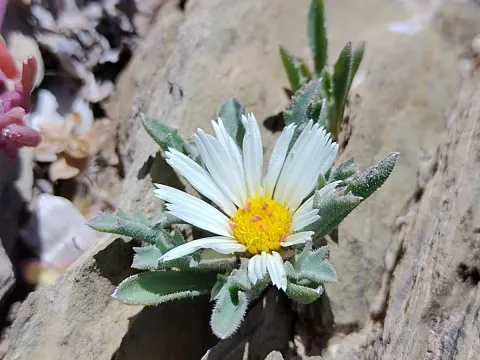
Asteriscus schultzii
Asteriscus schultzii
Asteriscus schultzii is a member of the Asteraceae family. It is a specialized, resilient plant adapted to the harsh, nutrient-poor, and often saline environments of coastal sand dunes and arid scrublands.
What the section contains
Asteriscus schultzii
Its natural range is primarily restricted to the Atlantic coast, including the Canary Islands. The plant has evolved unique physiological mechanisms to thrive under intense solar radiation and chronic water scarcity, making it a true xerophyte.
Cultivation requirements necessitate extremely well-drained, sandy soils. The plant is intolerant of waterlogged conditions, which can quickly lead to root rot. Good aeration in the root zone is the most critical factor for successful growth.
The climate requirement is characterized by high temperature ranges and low annual rainfall. It performs best in open, sunny locations where it can access maximum sunlight, which is essential for the development of its characteristic floral heads.
Agrotechnical practices should focus on mimicking its natural habitat. Supplemental irrigation should only be provided during the establishment phase; thereafter, the plant is largely self-sufficient, requiring minimal human intervention in arid settings.
The хозяйственная (economic) utility of Asteriscus schultzii is currently concentrated on ecological restoration projects. Its ability to stabilize shifting sands and withstand saline winds makes it an excellent candidate for coastal landscape rehabilitation.
While not a traditional cash crop, the biomass of the plant is subject to ongoing research regarding its secondary metabolites. Potential applications in the cosmetic or pharmaceutical industries are being explored due to its unique chemical profile.
Yield metrics for this species are often calculated based on soil stabilization coverage rather than tons per hectare. In nursery conditions, biomass production can be optimized through carefully managed spacing and nutrient supply, though excess fertilization should be avoided.
Seed harvesting is a delicate process requiring specialized knowledge. The seeds are light and prone to wind dispersal, necessitating timely collection once the flower heads reach maturity to ensure maximum yield potential.
The future productivity of this culture may be linked to its ability to serve as a sustainable groundcover in desertified areas, providing a low-maintenance solution for environmental protection and soil enrichment.
Asteriscus schultzii possesses robust natural defenses against common agricultural pathogens. Its high concentration of essential oils and specialized tissues serves as a deterrent to many typical herbivorous pests.
The primary threats to the plant's health are related to poor management, specifically soil saturation. Fungal infections, such as root rot, represent the most significant risk to the plant's long-term viability if drainage protocols are ignored.
While resistant, the plant can occasionally be affected by sucking insects like aphids when grown in closed, high-humidity environments. Proper airflow and ventilation are essential to mitigate the risk of such pest colonization.
Chemical intervention is generally discouraged due to the plant's sensitivity to synthetic pesticides. Integrated pest management, focusing on sanitation and maintaining optimal growth conditions, is the most effective approach.
Ongoing monitoring for signs of wilt or leaf spotting is advised. Any deviation from the plant's standard growth pattern should be evaluated as a potential indicator of environmental stress rather than a primary infestation.