
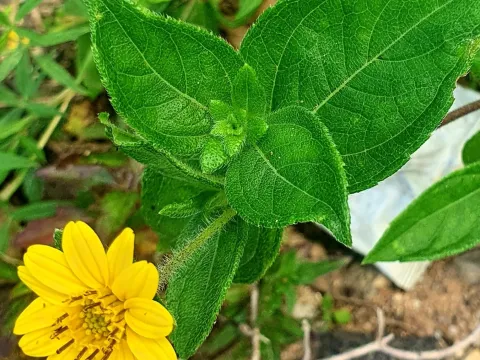
Aspilia africana
Aspilia africana
Aspilia africana is primarily propagated by seeds, although vegetative propagation via stem cuttings is also feasible. Sowing should commence at the beginning of the rainy season when the soil is warm and adequately moist to ensure rapid germination.
What the section contains
Aspilia africana
For optimal results, seeds are sown at a shallow depth to ensure sufficient contact with the moist growing medium. In tropical settings, both direct field sowing and the use of nursery-grown seedlings for transplanting are common agricultural practices.
Planting density depends on the specific end-use of the plantation; higher densities are preferred for biomass production. Ensuring adequate light exposure is crucial, as young seedlings are sensitive to intense shading during their early development.
Crop rotation is a standard requirement to mitigate the buildup of soil-borne pathogens common to the Asteraceae family. Integrating legumes into the rotation cycle helps maintain soil fertility and long-term land productivity.
Weeding is essential during the first month post-germination, as the slow initial growth rate of Aspilia makes it vulnerable to competition from aggressive weeds in the field.
Aspilia africana is a perennial herb belonging to the Asteraceae family, native to the tropical regions of Africa. It thrives best in well-drained, fertile loamy soils with a neutral to slightly acidic pH level.
The plant is highly light-demanding and requires full sun exposure to maximize flowering and the synthesis of secondary metabolites. Productivity significantly drops under shaded conditions, which also negatively impacts the quality of the harvested phytomass.
Stable, warm temperatures are necessary, with optimal growth occurring between 22 and 30 degrees Celsius. While it demonstrates moderate drought tolerance, regular moisture during critical vegetative stages is required to achieve a high-quality commercial yield.
Aspilia is not overly demanding regarding soil type, but it responds very favorably to organic amendments like compost or well-rotted manure, which significantly boost total biomass production per season.
This crop exhibits strong adaptability to various altitudes, although the most vigorous growth is consistently observed in the lowland and mid-altitude regions of the tropical zone.
The economic utility of Aspilia spans several sectors, including traditional medicine, veterinary science, and forage production. Its leaves are widely recognized in folk medicine for their potent wound-healing and anti-inflammatory properties.
In the livestock sector, this crop is valued as a promising source of green fodder due to its high protein and mineral content. It is readily consumed by small ruminants and poultry, making it an excellent addition to smallholder farming systems.
Aspilia also serves as an effective cover crop, helping to improve soil structure and prevent erosion on sloped land. Its complex root system effectively anchors the topsoil, reducing nutrient leaching and run-off.
Biomass yield is directly correlated with the frequency of pruning, which stimulates regrowth and branching. Under optimal conditions, a plantation can yield 3 to 4 substantial harvests per growing season.
The quality of medicinal raw material depends on the phenological stage; active compound concentration typically peaks at the onset of mass flowering, which determines the ideal timing for harvesting leaves and stems.
The primary threats to Aspilia are fungal diseases, which proliferate under high humidity and poor ventilation. Common issues include various types of powdery mildew and leaf spot pathogens that can compromise plant health.
Insect pests, including aphids and various caterpillar species, often attack the foliage and apical meristems, potentially stunting plant growth. During extended dry spells, spider mite infestations can also pose a significant risk to the crop.
Implementing biological control methods, such as encouraging natural predators and applying botanical-based biopesticides, is highly recommended to manage pest populations sustainably.
Waterlogging in the root zone frequently leads to root rot, necessitating proper field drainage. Infected plants must be removed immediately to prevent the rapid spread of soil-borne pathogens across the plantation.
Weekly monitoring is essential, particularly during heavy rains, to detect early symptoms like chlorosis or stem deformation, which often indicate the presence of pathogens or underlying micronutrient deficiencies.
Harvesting for medicinal use is performed manually by cutting the top sections of the shoots, including leaves and flowering heads. It is critical to use clean, sharp tools to avoid damaging the main stem and to ensure quick recovery.
For forage purposes, mechanical harvesting using mowers is acceptable, provided that the cutting height remains at least 10–15 centimeters above the soil surface to support sustained regrowth.
Harvested biomass must undergo immediate post-harvest processing, including cleaning and quality sorting. It is vital to dry the material away from direct ultraviolet light to preserve the volatile essential oils that contribute to its medicinal value.
The drying process should take place in a shaded, well-ventilated area, with the material spread out in thin layers to prevent microbial growth and degradation.
Dried product should be stored in airtight, moisture-proof containers in a cool, dark environment to ensure the commercial quality and shelf-life of the Aspilia harvest for up to 12 months.