
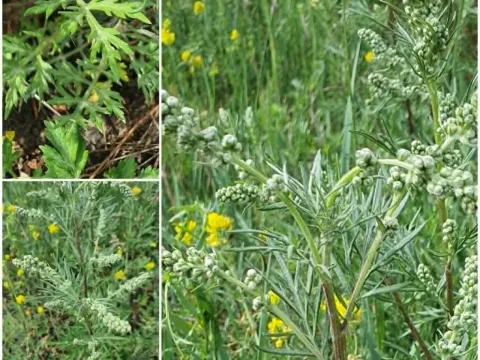
Mongolian wormwood
Artemisia mongolica
Mongolian wormwood (Artemisia mongolica) is a perennial herbaceous plant belonging to the Asteraceae family, native to the steppe and forest-steppe regions of East Asia.
What the section contains
Mongolian wormwood
The plant is highly adaptable to extreme continental climates, showing significant tolerance to cold winters and drought conditions typical of its natural habitat in Mongolia and China.
It thrives in well-drained, porous soils with a neutral or slightly alkaline pH. Waterlogging is detrimental to the plant, as it leads to root rot and decreases the vigor of the vegetation.
Abundant sunlight is a primary requirement for the healthy development of Mongolian wormwood, as it influences the metabolic processes responsible for producing secondary metabolites.
Cultivation practices should emphasize weed control, particularly during the first few weeks of growth, as young seedlings of Artemisia mongolica are not strong competitors.
Sowing is typically performed in early spring as soon as the soil can be worked, or during the autumn months to allow for natural stratification of the seeds.
Due to the extremely small size of the seeds, they should be sown shallowly and pressed firmly into the soil surface to ensure optimal contact for moisture absorption.
A sowing depth of 0.5 centimeters is recommended; deeper planting can result in poor germination and failure of the seedlings to emerge successfully.
The spacing between rows should be maintained between 45 to 60 centimeters to allow for mechanical cultivation and adequate airflow between individual plants.
Seedbed preparation must be thorough, involving fine tilling to create a uniform surface that facilitates even distribution of the seeds during the mechanical sowing process.
The harvest period occurs during the full flowering stage, which is the optimal time for extracting essential oils and medicinal constituents from the biomass.
Harvesters cut the aerial parts of the plant, ensuring that a healthy base remains to allow for regrowth and to maintain the longevity of the perennial planting.
Post-harvest management involves rapid drying in a shaded, well-ventilated environment to prevent fermentation and the loss of volatile compounds caused by heat and humidity.
This crop is widely utilized in traditional medicine and the supplement industry for its anti-inflammatory, antiseptic, and antimicrobial properties derived from its leaf extract.
Effective storage is critical; the dried herb must be kept in sealed, moisture-proof containers in a cool, dark place to preserve its pharmacological potency for future use.