
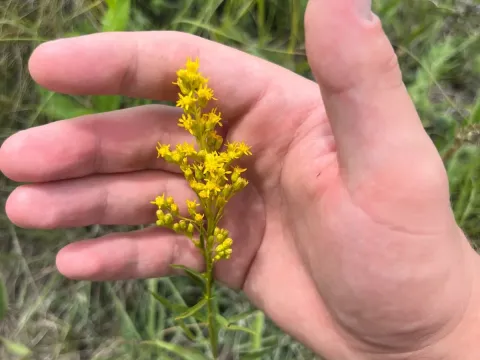
Missouri goldenrod
Solidago missouriensis
Missouri goldenrod (Solidago missouriensis) is a perennial herbaceous plant belonging to the Asteraceae family. Native to the prairies of North America, it is highly adapted to grassland environments. The species is characterized by its rhizomatous growth habit, which helps it form stable colonies over time.
What the section contains
Missouri goldenrod
The plant thrives in well-drained soils, including sandy, gravelly, and clay-loam textures. It is notably drought-tolerant, making it an excellent candidate for xeriscaping or areas where irrigation is limited. Its ability to withstand harsh environmental conditions makes it a resilient choice for sustainable planting.
This species requires full sun exposure to reach its maximum productivity and flowering potential. In shaded areas, the plant becomes leggy and less vigorous, significantly reducing its ecological value for pollinators. It is hardy in cold climates, enduring freezing winters without the need for additional protection.
Soil pH should ideally be neutral or slightly acidic. The plant does not require high levels of fertilization; in fact, overly fertile soils can sometimes lead to excessive vegetative growth at the expense of floral density. Good aeration is essential to prevent root rot in heavier soil types.
In terms of agricultural utility, Missouri goldenrod serves as an important late-season nectar source for bees and other beneficial insects. Its root structure makes it an effective species for soil stabilization on embankments and marginal lands where erosion control is a management priority.
Propagation is most commonly achieved through seeds that require a period of cold-moist stratification to break dormancy. Sowing can be done in the fall, allowing natural winter conditions to prepare the seeds for germination, or in early spring using pre-stratified material.
Seeds are small and should be sown on the surface of the soil with minimal coverage, usually by pressing them lightly into the dirt. Excessive burying of the seeds will prevent successful germination, as light is often a trigger for the initial stages of development.
Row spacing should generally be kept between 45 to 60 cm to allow for mechanical weeding and adequate air circulation. During the first growing season, growth is primarily focused on root development, meaning the plants will appear smaller and slower to develop above ground.
Vegetative propagation via rhizome division is an alternative method used for rapid establishment in smaller plots. This process should be performed during the plant's dormant phase to minimize stress and ensure high transplant survival rates.
Proper weed management is critical during the initial establishment period. Because the seedlings start slowly, they may be outcompeted by invasive weeds if the plot is not maintained regularly. Once the goldenrod is established, its rhizomatous nature makes it quite competitive.
Missouri goldenrod is generally quite resistant to most common plant diseases. However, in environments with high humidity and limited air movement, powdery mildew can occur. Maintaining proper spacing and ensuring adequate airflow are the primary methods of prevention.
Pest pressure is usually low, though occasional outbreaks of aphids or foliage-feeding beetles may happen. These are rarely economically significant, as natural predator populations usually manage these pests effectively in balanced field ecosystems.
Root rot is the main threat linked to mismanagement, occurring specifically when the plants are grown in waterlogged or poorly drained soils. Selecting appropriate sites with natural drainage is the most effective way to avoid this issue entirely.
Invasive species can pose a threat to goldenrod stands if the goldenrod is not already well-established. Routine monitoring and the removal of opportunistic weeds are recommended practices for any productive field management.
While the plant is hardy, physical damage to the rhizomes during cultivation should be minimized. Deep tillage near the plant base can disturb the root network and promote the entry of soil-borne pathogens, so shallow cultivation is preferred.