
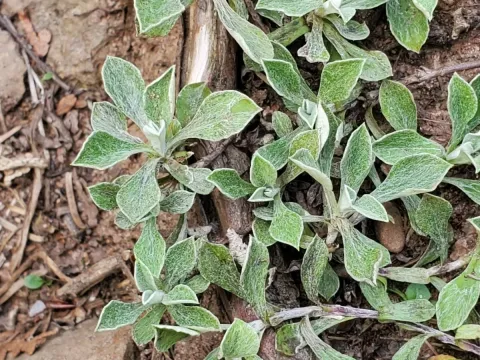
Mountain everlasting
Antennaria neodioica
Propagation of mountain everlasting is achieved through seeds or division of the rootstock. Seeds should be sown in early spring in well-draining seed trays, benefiting from a cold stratification period to improve germination rates.
What the section contains
Mountain everlasting
The substrate for sowing must be light, sandy, and lean. Press the seeds into the surface without covering them deeply, as they require light to germinate effectively within the appropriate temperature range.
Transplanting the seedlings to the field occurs once the danger of late spring frost has completely passed. Spacing is crucial, with 25 cm being the standard to allow the plant to form its characteristic mat-like growth.
Division is performed in late summer after the flowering cycle concludes. Dividing the plant every 3–4 years prevents the center of the mat from becoming sparse and keeps the colony vigorous.
When dividing, ensure each section has adequate root mass. Planting these sections immediately and watering them until established ensures a high success rate.
Mountain everlasting thrives in full sun, which is essential for maintaining its silver-white foliage and overall plant vigor. Shady areas will inevitably result in leggy stems and poor flower production.
The soil requirements are specific: it must be poor, gritty, and acidic to neutral. High levels of soil fertility are detrimental as they encourage excessive leafy growth at the expense of the plant's hardiness.
This species is well-adapted to drought, utilizing its pubescence to retain moisture. Irrigation should be minimal, focused only on newly planted specimens to aid root establishment in the first growing season.
Regarding climate, the plant is extremely frost-hardy and requires no special protection during winter. It is an ideal species for alpine gardens, rockeries, and xeriscaping projects.
Minimal intervention is the hallmark of its agrotechnics. Avoid fertilizers, as the plant is naturally adapted to nutrient-poor, rocky environments where it faces little competition.
Root rot caused by stagnant water is the primary agronomic threat to this culture. Ensuring excellent drainage through the use of gravel or sandy slopes is the best preventive measure against soil-borne pathogens.
Fungal infections, such as powdery mildew, may occur if air circulation is obstructed by weeds or dense neighboring plants. Keeping the site clean and ventilated is vital for disease control.
Pests are rarely a major issue, though aphids may colonize the flower stalks during particularly warm, dry spells. Monitoring during the early flowering phase allows for quick manual intervention.
Weed competition is the most significant challenge in commercial production. As a slow-growing ground cover, Antennaria dioica cannot compete with aggressive weeds, requiring diligent manual weeding.
In regions with fluctuating temperatures and no snow cover, freeze-thaw cycles can cause soil heaving. Applying a light layer of mulch can help protect the roots in such extreme climate conditions.