
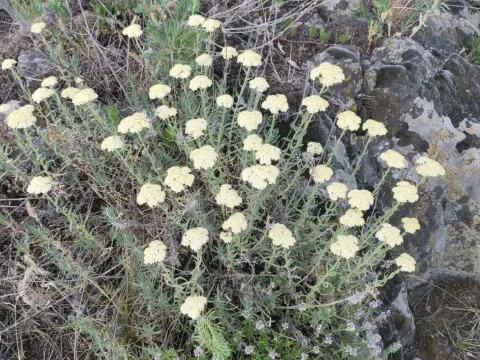
Pale yellow yarrow
Achillea ochroleuca
Pale yellow yarrow (Achillea ochroleuca) is a perennial herbaceous plant belonging to the Asteraceae family. It is characterized by its erect stems with finely divided foliage and dense clusters of pale yellow flower heads.
What the section contains
Pale yellow yarrow
The plant originates from the steppe and forest-steppe zones of Southeastern Europe and Western Asia. It is naturally adapted to dry, stony environments and open meadows, displaying remarkable drought resistance throughout its vegetative cycle.
This crop thrives in well-drained, sandy or loamy soils with a neutral to slightly alkaline pH. Excessive moisture or waterlogged soil is detrimental, as it often leads to root rot and poor plant development during the dormant season.
Ideally, this species requires full sunlight to flourish. Exposure to high levels of solar radiation is essential for the healthy development of its essential oils, which are highly valued in both ornamental and medicinal applications.
In modern agriculture, pale yellow yarrow is recognized as a useful medicinal plant and a valuable nectar source for pollinators. Its inclusion in landscapes and fields provides ecological benefits, supporting biodiversity and beneficial insect populations.
Sowing Achillea ochroleuca is best conducted in early spring when the soil temperatures reach approximately 10 degrees Celsius. Late autumn (dormant) sowing is also an option in regions with mild winters to take advantage of natural stratification.
Because the seeds are extremely small, they should be sown on the soil surface or covered with a very thin layer of fine substrate. A row spacing of 45 to 60 centimeters is recommended to facilitate mechanical weeding and ensure optimal air circulation.
Proper seedbed preparation is vital. The area must be cleared of perennial weeds before planting, as young seedlings grow relatively slowly and can be easily outcompeted during the first few weeks of establishment.
A seeding rate of approximately 0.5 to 1 kilogram per hectare is typically sufficient. It is crucial to lightly pack the soil after sowing to ensure that the small seeds maintain sufficient contact with soil moisture for successful germination.
Once established, the plants form a sturdy rosette. Routine mechanical cultivation of inter-row spaces helps manage weeds effectively. After the first year, the crop becomes highly competitive, often suppressing weed growth without requiring intensive intervention.
Common diseases affecting this crop include powdery mildew and rust, particularly in seasons with high humidity or poor aeration. Maintaining appropriate plant density is the primary cultural practice for preventing the spread of these fungal pathogens.
Insect pests, such as aphids and various lepidopteran larvae, may occasionally attack the foliage during the active growing season. Regular field monitoring is essential to catch outbreaks early and avoid significant yield losses in the harvestable biomass.
Biological pest control methods are preferred, especially when the harvest is intended for the herbal supplement or pharmaceutical market. Using integrated pest management (IPM) helps maintain the quality and organic integrity of the crop.
Root system pests, such as wireworms, can be problematic if the field has recently been converted from pastureland. Crop rotation is the most effective strategy for mitigating soil-borne pest risks and ensuring long-term field health.
To prevent the buildup of soil pathogens, it is recommended to avoid planting yarrow in the same field more than once every four to five years. Healthy plants in well-drained soils are significantly more resistant to pressure from pests and diseases.