
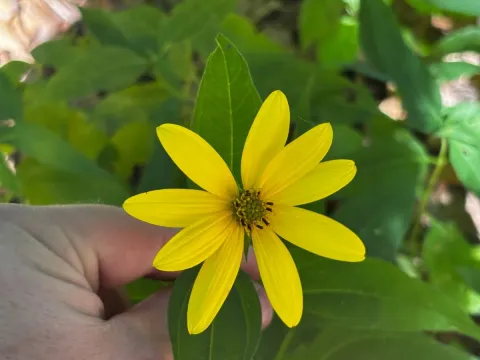
Pale-leaved sunflower
Helianthus strumosus
The Pale-leaved sunflower (Helianthus strumosus) is a perennial plant species within the Asteraceae family. It is characterized by a vigorous root system featuring rhizomes that store nutrients for winter dormancy.
What the section contains
Pale-leaved sunflower
Native to North America, this species grows naturally in thickets, woodlands, and along riverbanks. It is known for its high adaptability to varying ecological niches.
The plant thrives in well-drained loamy soils but can tolerate a wide range of conditions, provided there is adequate moisture during the active growing season.
It exhibits excellent winter hardiness, allowing it to survive in regions with significant temperature fluctuations, which is a major advantage for perennial cultivation.
While it prefers full sun for optimal photosynthesis and biomass accumulation, it is one of the few sunflower species capable of growing in partial shade.
In agricultural settings, this species is primarily utilized as a forage crop. Its ability to produce substantial green biomass makes it a viable candidate for silage production.
The underground tubers are considered a valuable source of nutrients for livestock, including cattle and pigs, due to their high carbohydrate content.
Beyond forage, the plant has potential as a feedstock for bioenergy production, specifically for fermentation into ethanol or biogas production.
The crop serves an ecological role as a late-season honey plant, supporting pollinator populations during times when other nectar sources are scarce.
In landscape management, it is often utilized for soil stabilization and as a natural screen or windbreak due to its rapid growth and height.
Powdery mildew is a common fungal threat, particularly in dense stands where air circulation is limited and humidity levels remain consistently high.
Rust diseases represent a serious challenge, potentially affecting leaf tissue integrity and reducing the overall nutritional quality of the forage.
Wireworms are the most significant soil-borne pests, as they consume the developing tubers, which can weaken the plant and reduce its spread.
Aphid infestations are frequently observed on the succulent growing tips of the stalks, which may hinder the plant's structural development.
Effective management involves careful site selection, ensuring adequate spacing between rows, and implementing biological control methods where applicable.