
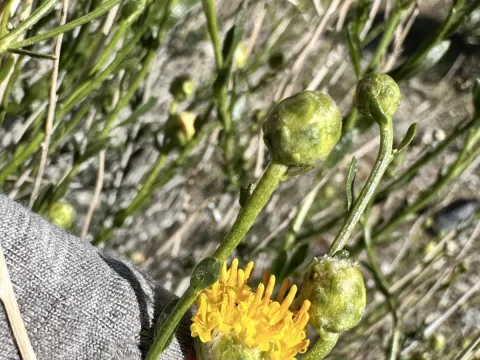
Acamptopappus
Acamptopappus
Acamptopappus is a genus of perennial shrubs belonging to the Asteraceae family. Native to the desert regions of the southwestern United States, these plants have evolved specialized mechanisms to survive in arid, high-heat environments with minimal rainfall.
What the section contains


Acamptopappus
The botanical structure of the plant features small, resilient leaves often covered in fine hairs to prevent water loss. The root system is deep and extensive, allowing it to anchor securely in loose sandy or gravelly desert soils.
Success in cultivation requires soil with exceptional drainage properties. Because Acamptopappus naturally thrives in nutrient-poor desert soils, it is highly sensitive to over-fertilization and standing water, which can trigger root rot.
Climate requirements for this plant are stringent; it demands full sun exposure and a dry environment. The species is highly adapted to significant diurnal temperature fluctuations, making it suitable for regions with hot days and cool nights.
Economically, this plant is primarily utilized in xeriscaping and ecological restoration projects. It serves as an excellent ground stabilizer in degraded desert areas, preventing soil erosion without the need for supplemental irrigation.
The primary threat to the health of Acamptopappus is the development of root pathogens caused by soil saturation. Maintaining a strictly dry soil surface and ensuring optimal airflow around the base of the plant are critical preventative measures.
There are no major insect pests that typically reach economic injury levels on this species in managed landscapes. Occasional fungal issues may arise if the plant is grown in overly humid climates, necessitating fungicide treatment and improved drainage.