
Bulbinella nutans
Bulbinella nutans
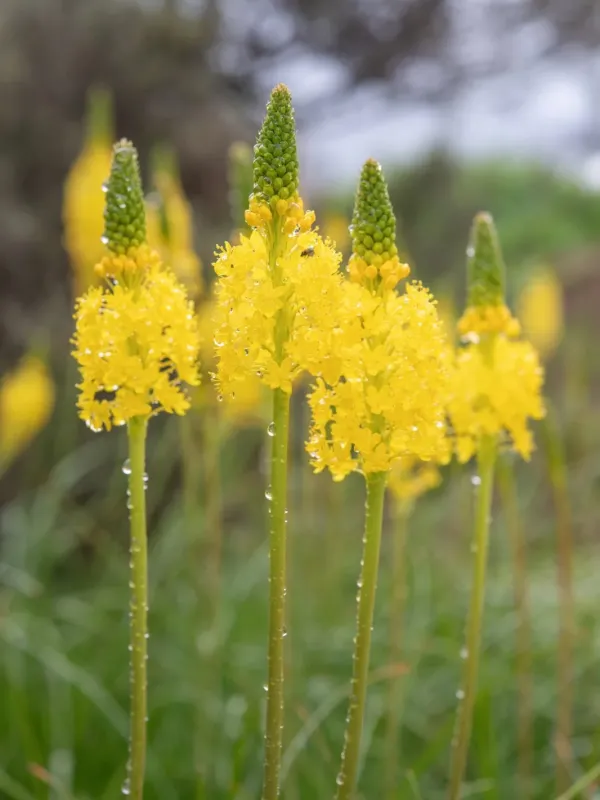
Description
Sowing dates
Propagation of Bulbinella nutans is primarily done through seeds sown in late summer or autumn. Using a well-drained, sterile seed-starting mix ensures the best germination results for this species.
Sow seeds shallowly, covering them with a thin layer of fine substrate to maintain necessary humidity. It is crucial to keep the containers in a sheltered area, such as a cold frame or a greenhouse.
Germination typically occurs over several weeks. Consistent moisture is vital during the early stages, but overwatering must be strictly avoided to prevent the seeds from damping off.
Seedlings should be kept in a well-lit environment once they emerge. Providing good ventilation is essential to prevent fungal issues that commonly affect young seedlings in confined spaces.
Transplanting to larger pots or individual containers is recommended once the seedlings have established a robust root system. Gradually acclimatize them to outdoor conditions before final planting.
Growing requirements
Bulbinella nutans belongs to the Xanthorrhoeaceae family and is native to the diverse landscapes of South Africa. As a perennial geophyte, it thrives in environments that mimic its natural habitat.
The plant requires full sun to partial shade, with at least 6 hours of direct sunlight per day to ensure strong stem development and prolific flowering. Site selection is critical for success.
Soil quality should be sandy or loamy with excellent drainage. If the native soil is heavy clay, amending it with organic matter and grit is highly recommended to improve structure and drainage.
Watering management is the most critical aspect of care. The soil should remain moist during the growing season but must be allowed to dry out significantly during the summer dormancy period.
Fertilizing with a balanced, slow-release fertilizer at the beginning of the growth cycle provides the necessary nutrients. Avoid excessive nitrogen, which can lead to weak, elongated stems.
Main diseases and pests
Fungal pathogens such as Pythium or Phytophthora are the most frequent causes of decline in Bulbinella populations, especially when grown in poorly drained soils or humid conditions.
Root rot management involves improving soil aeration and adjusting watering schedules. In severe cases, systemic fungicides may be applied to save the remaining healthy rootstock.
Pests like aphids are common, especially during the spring bloom. Infestations should be managed with biological controls or insecticidal soaps to prevent damage to the flower spikes.
Red spider mites can occur in periods of low humidity. Regularly misting the surrounding area or using appropriate acaricides can help manage these populations effectively.
Slugs and snails are notorious for feeding on the foliage of young plants. Setting up physical barriers such as copper tape or crushed eggshells can help mitigate the damage.