
Bulbinella angustifolia
Bulbinella angustifolia
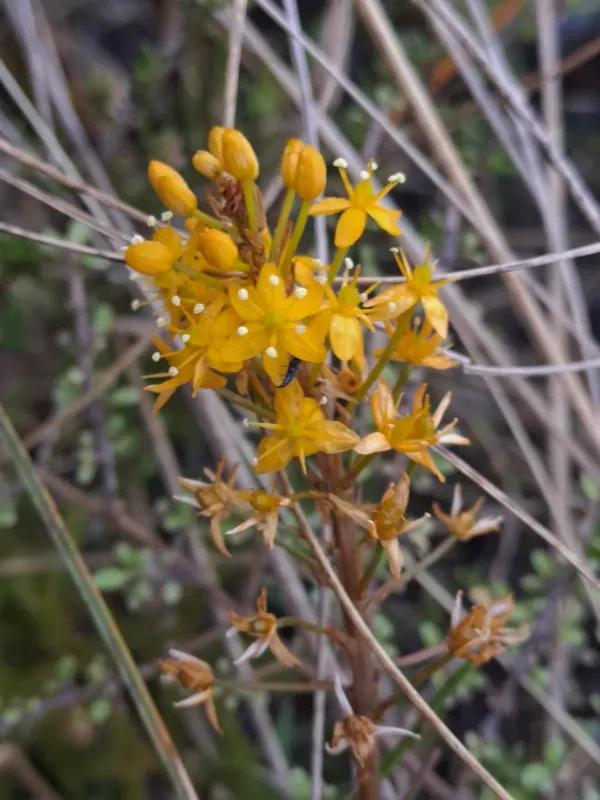
Description
Sowing dates
Sowing seeds of Bulbinella angustifolia is best performed in the autumn immediately after harvest or in early spring following a period of cold stratification. Using a loose, well-draining substrate rich in organic matter ensures optimal germination rates.
The seeds should be sown at a shallow depth of approximately 0.5 to 1 centimeter. Maintaining consistent soil moisture during the germination phase is critical, though one must avoid waterlogging, which can lead to fungal issues.
Vegetative propagation, involving the division of rhizomes or offsets, should be conducted during the plant's dormancy phase. The ideal timing for this is after the aerial parts have naturally withered at the end of the summer season.
When selecting a planting site, choose an area protected from strong winds that receives plenty of natural sunlight. Amending the soil with mature compost prior to planting helps improve soil structure and nutrient availability.
Under controlled temperatures of 15–20 degrees Celsius, seedlings typically emerge within 3 to 5 weeks. Once the plants develop two true leaves, they should be carefully pricked out into individual pots to facilitate root development.
Growing requirements
Bulbinella angustifolia, a member of the Asphodelaceae family, is a perennial ephemeroid native to southern African regions. It thrives under conditions that mimic its natural habitat, requiring high light intensity and distinct seasonal changes.
The plant requires neutral to slightly acidic, aerated soil for healthy growth. Heavy clay soils are generally unsuitable and must be significantly amended with sand or horticultural grit to ensure adequate drainage.
The species prefers climates with mild, moist winters and dry, warm summers. In regions with harsh winters, it is typically cultivated in containers or protected environments to prevent freezing damage to the bulbous roots.
Regular irrigation is essential during the active growing season, particularly in spring when the flower spikes begin to develop. Watering should be gradually reduced as the foliage begins to yellow, entering a dry summer dormancy.
Fertilization should be applied at the start of the growing season using a balanced, low-nitrogen formula. Excessive nitrogen promotes lush foliage at the expense of flower production and can weaken the overall structural integrity of the plant.
Main diseases and pests
Root rot, driven by excessive soil moisture and poor drainage, represents the most significant threat to the health of Bulbinella angustifolia. Initial symptoms include stunted growth and chlorosis of the leaf tips.
Pests such as aphids and spider mites may become problematic, especially in indoor or greenhouse settings with low humidity. Regular monitoring and the application of insecticidal soaps can manage these infestations effectively.
Slugs and snails can cause significant damage to young shoots during moist spring weather. Implementing physical barriers or organic molluscicides around the base of the plants is recommended to minimize herbivory.
Fusarium wilt is a severe fungal disease that propagates rapidly in warm, damp conditions. Infected plants should be promptly excavated and discarded to prevent the spread of the pathogen to neighboring specimens.
Good cultural practices, such as maintaining proper airflow, disinfecting tools between uses, and avoiding overhead watering, are the primary methods for preventing disease outbreaks in this species.