
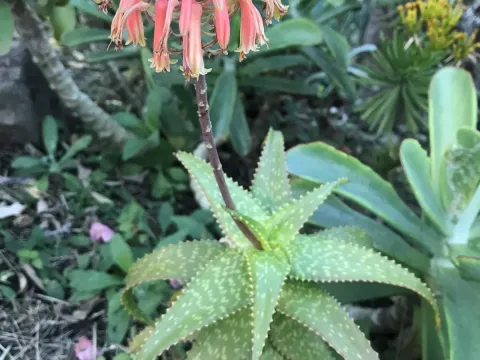
Aloe andongensis
Aloe andongensis
Aloe andongensis belongs to the Asphodelaceae family and is an endemic succulent species native to the rocky landscapes of Angola. It forms a distinct, attractive rosette of fleshy, spotted leaves, characteristic of many aloes originating from this region of Africa.
What the section contains
Aloe andongensis
The plant thrives in bright, direct sunlight which is essential for maintaining its compact growth habit. Providing insufficient light will cause the plant to etiolate, losing its natural aesthetic shape and becoming susceptible to weaker tissue development.
Requirements for the growth medium are strict regarding drainage. It is mandatory to use a well-aerated, gritty substrate specifically designed for succulents, which prevents water from pooling around the root system, thereby avoiding root rot.
Watering practices should mimic the arid cycles of its natural habitat. During the active growing season, deep but infrequent watering is recommended, allowing the soil to dry out completely between sessions to maintain healthy metabolic activity.
Temperature tolerance is limited to tropical and subtropical ranges. The species does not survive frost and must be maintained in environments that stay consistently above 10 degrees Celsius, making it an ideal candidate for indoor, greenhouse, or conservatory cultivation.
The primary threat to Aloe andongensis is root rot, frequently triggered by overwatering or poor drainage systems. This pathological condition destroys the root hairs and eventually kills the plant, starting from the basal region of the rosette.
Mealybugs are the most common pests found on this succulent. They tend to hide in the tight spaces between leaves, making them difficult to detect until they cause significant damage to the plant's epidermis through sap sucking.
Scale insects can also infest the leaves, forming hard, shield-like structures on the surface. These pests weaken the plant significantly and should be treated with systemic insecticides or removed manually if the infestation is caught early.
Fungal infections can occur if the plant is kept in conditions with high humidity and poor air circulation. Symptoms include darkened, soft spots on the leaves, which require immediate removal of the infected tissue and localized fungicide treatment.
Maintaining proper hygiene by keeping the leaf surfaces free of dust and debris is a vital aspect of pest and disease control. Ensuring that the foliage remains dry during watering sessions also significantly lowers the risk of developing bacterial infections.