
Schefflera taiwaniana
Schefflera taiwaniana (Nakai) Kaneh.
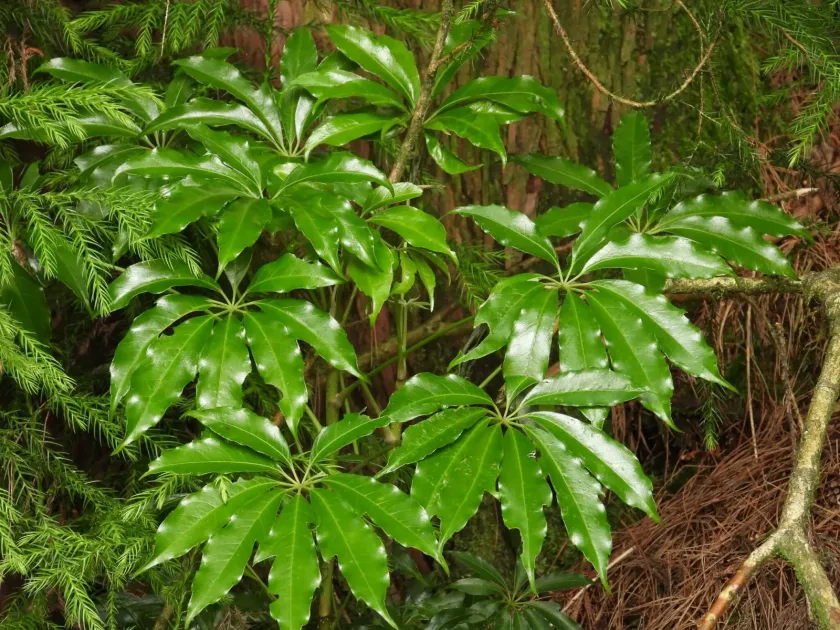
Description
Growing requirements
Schefflera taiwaniana is a member of the Araliaceae family. It is an evergreen, woody perennial known for its elegant, palmately compound leaves that form a striking architectural structure.
This species originates from the mountainous regions of Taiwan. It has evolved in cool, high-altitude forest environments, which makes it particularly adapted to temperate climates compared to other tropical species of the genus.
The plant thrives under bright, filtered light conditions. Direct sunlight exposure should be avoided as it can scorch the foliage, while insufficient light may result in leggy, weak growth and loss of variegation or leaf density.
Soil requirements focus on high drainage capacity. A well-aerated, slightly acidic substrate is ideal, ensuring that water passes through freely without waterlogging the sensitive root system.
Agrotechnical maintenance requires consistent moisture levels. During the growing season, regular irrigation and balanced fertilization are necessary to support the plant's structural development and leaf quality.
Main diseases and pests
Spider mites are the most common pest associated with Schefflera taiwaniana, especially in indoor environments where low humidity levels prevail during the heating season.
Scale insects can also pose a significant threat. These pests attach themselves to the stems and the undersides of leaves, extracting plant sap and leading to stunted growth or chlorosis.
Root rot remains the most critical physiological disorder, primarily caused by overwatering or poor drainage systems. It often manifests as sudden leaf drop and stem discoloration.
Fungal leaf spot diseases can develop if the foliage remains wet for extended periods in environments with poor air circulation, necessitating better ventilation protocols.
Integrated pest management strategies involve regular monitoring, mechanical removal of pests, and the judicious use of horticultural soaps or systemic pesticides when infestations exceed economic thresholds.