
Schefflera actinophylla
Schefflera actinophylla (Endl.) Harms
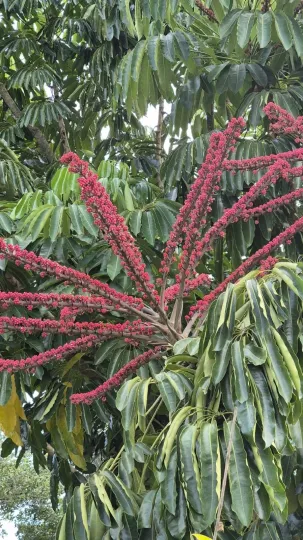
Description
Growing requirements
Schefflera actinophylla, commonly known as the octopus tree, is a large evergreen plant belonging to the Araliaceae family. Native to tropical rainforests in Australia and New Guinea, it typically grows as an epiphytic tree in its natural habitat, reaching impressive heights.
The plant is characterized by its large, compound, palmately divided leaves. Each leaf typically consists of 7 to 16 leaflets radiating from a central point, creating a distinctive umbrella-like appearance. In indoor environments, it is prized for its architectural form and lush foliage.
It thrives in bright, indirect light but can tolerate partial shade. While it is adaptable, excessive direct sun exposure should be avoided as it can scorch the glossy leaves, causing brown patches and permanent damage to the plant's aesthetic value.
A well-draining, nutrient-rich potting mix is essential for the healthy development of this species. Standard commercial soil mixes with added perlite or bark usually provide the necessary aeration and moisture-retention balance required for optimal growth.
The ideal temperature range for this plant is between 18 and 25 degrees Celsius. It requires consistent humidity levels, and in dry indoor environments, regular misting or the use of an electric humidifier is highly recommended to prevent leaf desiccation.
Main diseases and pests
Schefflera actinophylla is susceptible to common houseplant pests, including spider mites, scale insects, and mealybugs. These pests frequently congregate in the crevices of the leaf stems and on the undersides of the leaves, drawing vital nutrients.
Root rot is the most common disease associated with this crop, usually caused by overwatering or poor drainage. This condition quickly leads to blackened, mushy root systems and a subsequent rapid decline in the plant's overall health.
Environmental stress, such as exposure to cold drafts or rapid temperature fluctuations, often causes significant leaf drop. This reaction is a defensive mechanism against unfavorable growth conditions that cannot be corrected by fertilization alone.
Management of pest infestations requires diligent monitoring and the application of suitable insecticides or horticultural soaps. Regular cleaning of the leaves helps reduce dust and makes it easier to spot early signs of pest colonisation.
Maintaining a balanced irrigation schedule is the primary strategy for preventing root diseases. Growers should always allow the top layer of soil to dry out significantly before applying more water to ensure proper oxygen exchange for the roots.