
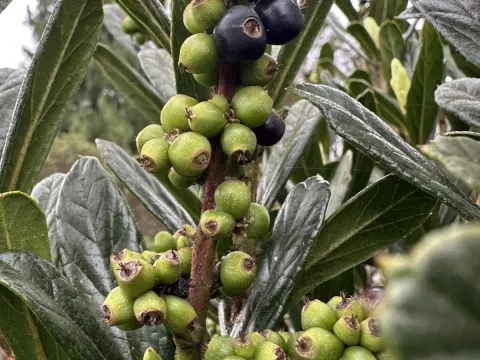
Oreopanax
Oreopanax Decne. et Planch.
Oreopanax is a diverse genus of evergreen trees and shrubs belonging to the Araliaceae family. Native to the mountain forests of Central and South America, these plants are known for their striking architectural foliage.
What the section contains
Oreopanax
The plant thrives in stable climatic conditions with temperatures ideally ranging from 18 to 24 degrees Celsius. It is sensitive to extreme heat and cold, necessitating protected environments in non-tropical regions.
Proper light management is essential for Oreopanax. The plants require bright, indirect light to maintain their leaf color and shape, as direct sunlight can easily scorch the delicate tissues of the leaves.
Soil requirements focus on well-draining, nutrient-rich mediums. A mix comprising peat moss, leaf compost, and perlite or coarse sand provides the necessary aeration and moisture retention for healthy root development.
The primary use of Oreopanax is ornamental. It is widely prized by landscape designers for indoor plantscaping, where it serves as a structural specimen in large, high-ceilinged spaces or conservatories.
Spider mites are the most common pests affecting Oreopanax, particularly in indoor settings with low humidity. Regular misting and keeping the environment humid can significantly reduce the risk of infestation.
Scale insects can attach themselves to the stems and the underside of leaves, feeding on plant sap. Early detection is key, and physical removal followed by horticultural soap or systemic treatments is effective.
Root rot is a major threat caused by overwatering or poorly draining soil. To prevent this, growers must ensure that the substrate is allowed to dry out slightly between watering cycles.
Mealybugs can cluster in leaf axils, hindering growth and causing disfigurement. Effective management involves isolated care and the application of targeted insecticides to affected areas only.
Maintaining strong, healthy plants through appropriate fertilization and consistent environmental control is the best defense against pests and diseases for this tropical genus.