
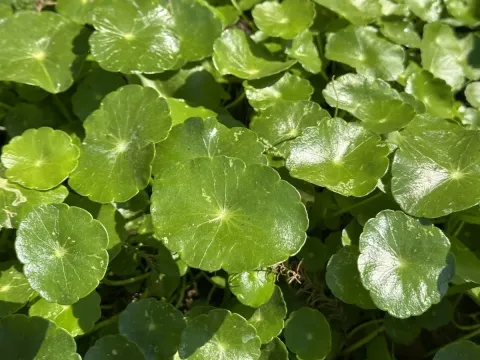
Pennywort
Hydrocotyle L.
Sowing Pennywort is typically performed in early spring when environmental conditions support active development and soil moisture is at its peak levels for the season.
What the section contains


Pennywort
Seeds of the Hydrocotyle species often require cold stratification to break dormancy, ensuring a more uniform and vigorous germination rate across the entire planting area.
Vegetative propagation is the preferred method for commercial cultivation, involving the separation of established rhizomes that are then replanted into moist, nutrient-rich substrates.
Cuttings should be kept in high-humidity conditions immediately after planting to ensure that the stems develop a robust root system before the onset of extreme temperatures.
The spacing between individual plants should allow for rapid vegetative expansion, as the culture naturally forms dense mats that cover the surface of the growing medium efficiently.
As a member of the Araliaceae family, Hydrocotyle thrives in wetland environments and requires consistent access to water throughout its entire biological cycle.
Soil requirements for this crop include a high organic matter content, which helps maintain the structural integrity and nutrient supply necessary for constant leaf production.
The plant demonstrates significant environmental flexibility, although it performs best in temperatures ranging from 18 to 25 degrees Celsius and avoids direct, scorching sunlight.
Consistent aeration and drainage of the substrate are vital to prevent the accumulation of toxins, despite the plant's natural preference for water-logged conditions.
Supplemental fertilization is recommended during the peak growing season, specifically utilizing nitrogen-heavy inputs to support the proliferation of foliage and lateral stems.
The yield of Pennywort is primarily measured by the total volume of fresh biomass produced, which is highly dependent on the fertility of the growing medium and water availability.
Under optimal conditions, the plant can be harvested multiple times throughout the growing season, provided that enough apical meristems remain to allow for rapid regeneration.
Proper management of the population density ensures that each plant receives enough light to maintain high photosynthetic efficiency, which directly correlates to the final harvest weight.
In vertical farming or hydroponic systems, yields can be significantly increased by optimizing the nutrient solution, which allows for year-round production cycles.
Harvesting strategies should be carefully timed to coincide with the periods of maximum leaf size, ensuring that the final product meets commercial quality standards.
Hydrocotyle is susceptible to various fungal pathogens that thrive in high-humidity environments, necessitating strict control of airflow to prevent the onset of mold.
Pest populations, particularly aphids and mites, can quickly overwhelm a crop if integrated pest management strategies are not strictly observed from the start of the season.
Weed competition is a significant concern during the establishment phase, as the plant initially grows slowly and can be easily outcompeted by more aggressive vegetation.
Regular sanitation of the growing area, including the removal of dead or dying plant debris, is essential for maintaining the overall health and vigor of the culture.
Utilizing physical barriers or organic biological controls is recommended over synthetic chemicals, especially given the frequent use of the plant in edible or pharmaceutical applications.
Harvesting is usually conducted using mechanical tools or manual clipping, depending on the scale of the operation and the intended use of the harvested plant material.
For fresh market consumption, stems are cut just above the soil line or water surface, ensuring that the root system remains intact for subsequent growth cycles.
Post-harvest handling is critical for maintaining quality, as the leaves are delicate and prone to wilting if not cooled and stored at appropriate humidity levels immediately.
The timing of the harvest is crucial for maintaining the plant's nutritional profile, and it is generally best performed in the early morning hours to preserve freshness.
Storage of the harvested crop should be done in ventilated containers to prevent moisture buildup, which can cause rapid decay and compromise the value of the final product.