
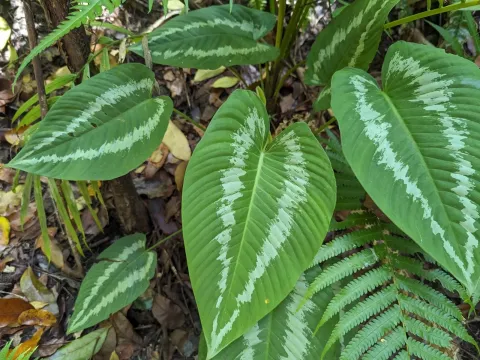
Schismatoglottis
Schismatoglottis
Schismatoglottis is a diverse genus of herbaceous perennial plants belonging to the Araceae family. Native to the tropical rainforests of Southeast Asia, these plants have adapted to high humidity, consistent temperatures, and low-light forest floor conditions.
What the section contains
Schismatoglottis
To successfully cultivate Schismatoglottis, one must mimic its natural habitat. This requires high ambient humidity, ideally above 60%, and stable temperatures between 20°C and 26°C. They thrive in environments where conditions remain relatively constant throughout the year.
The growing medium should be well-draining, airy, and rich in organic matter. A recommended potting mix usually includes peat moss or coconut coir, mixed with perlite, orchid bark, and charcoal to prevent compaction and ensure adequate root oxygenation.
Lighting is crucial for maintaining the plant's ornamental variegated patterns. Schismatoglottis prefers bright, indirect light. Direct sunlight must be avoided as it can scorch the foliage, while insufficient light leads to leggy growth and fading colors.
Watering should be managed carefully, ensuring the substrate remains moist but never soggy. Using lukewarm, filtered water helps prevent chlorine buildup in the soil, which can be sensitive for some species within the genus.
The primary threats to Schismatoglottis are fungal and bacterial infections, often resulting from overwatering or poor air circulation. These pathogens frequently target the roots and stems, leading to rapid decay if not addressed immediately.
Pests such as spider mites and mealybugs are common, especially in drier environments. Spider mites thrive when air humidity drops, piercing the leaf tissue to feed on cell sap and causing stippling or yellowing of the leaves.
Effective pest management involves maintaining high humidity to discourage mites, alongside regular inspections. If an infestation occurs, insecticidal soaps or neem oil treatments are typically effective if applied thoroughly across all leaf surfaces.
Root rot prevention is the most critical aspect of plant health. Repotting into fresh, sterile substrate and inspecting for mushy or blackened roots can salvage a struggling plant. Ensure the pot has adequate drainage holes to prevent water accumulation.
General hygiene, such as wiping leaves with a damp cloth to remove dust and checking for signs of stress, remains the best practice for long-term plant health and vigor in ornamental cultivation settings.