
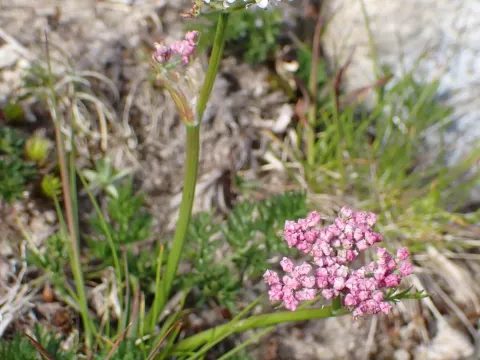
Mountain lovage
Ligusticum mutellina
Sowing mountain lovage seeds is best performed in the autumn to allow for natural cold stratification during the winter. This process is essential for breaking seed dormancy and ensuring uniform germination once temperatures begin to rise in the spring.
What the section contains
Mountain lovage
If spring sowing is preferred, seeds must undergo artificial stratification in a refrigerator for at least 4 to 6 weeks. They should be sown in a well-draining, fine-textured seed starting mix, barely covering the seeds as they require light to germinate effectively.
Maintain consistent moisture levels during the germination phase, which typically lasts from two to four weeks depending on the temperature. A cool environment with temperatures around 10–12°C is optimal for the initial development of the seedlings.
Once seedlings have developed two true leaves, they can be thinned or transplanted to their final location. Careful handling of the root system is advised, as the plant can be sensitive to root disturbance during the early growth stages.
Establishing the plants requires patience, as mountain lovage tends to focus its energy on building a robust root system during the first year, resulting in slow initial growth above ground.
Ligusticum mutellina belongs to the Apiaceae family and is native to high-altitude mountain meadows in the Alps and Carpathians. It thrives in conditions characterized by cool air, high light intensity, and well-drained, nutrient-rich soils.
Soil structure is critical; the plant requires a loose, gritty substrate to prevent waterlogging. Adding sand or volcanic rock to heavier garden soils can mimic its natural rocky habitat and prevent root decay, which is the most common cause of failure.
As an alpine species, it is exceptionally hardy and capable of withstanding extreme cold. However, it may struggle in lowland regions with hot, humid summers, making it better suited for higher elevations or cooler climatic zones with sufficient moisture.
Full sun exposure is necessary for the plant to produce high-quality aromatic oils. While it can tolerate partial shade, insufficient light often results in weak stems and lower concentrations of its distinctive fragrance, which is highly valued in culinary applications.
Nutrient requirements are modest; an application of balanced, slow-release fertilizer in early spring is generally sufficient. Avoid excessive nitrogen, which can lead to rapid, succulent growth that is more susceptible to disease and winter damage.
Mountain lovage is primarily harvested for its fragrant leaves and roots, which have a complex, slightly spicy, and herbaceous profile. Yields are typically modest, reflecting the plant's alpine nature and slow growth rate compared to conventional garden herbs.
Harvesting leaves for culinary use can commence from the second year onwards. Careful harvesting involves picking only the outer leaves, allowing the central crown to continue growing, which ensures a longer lifespan for the plant.
Root harvesting is usually conducted when the plants reach maturity, typically at three to four years of age. The roots contain the highest concentration of volatile oils and provide a potent flavoring agent for soups, stews, and herbal extracts.
Quality control during harvest is paramount. Leaves and roots must be cleaned and dried using low-temperature methods to preserve their volatile aromatic compounds, which can be easily lost if exposed to excessive heat or direct sunlight.
Although it is not a high-volume industrial crop, its value lies in its niche market as a specialty ingredient for high-end gastronomy and as a potent herbal tonic used in traditional mountain medicinal practices.
Disease pressure in mountain lovage is mostly related to moisture management. Powdery mildew can appear if airflow around the foliage is restricted or if the surrounding humidity remains excessively high for extended periods.
Root rot is the most serious threat, often occurring in heavy, compact soils where water does not drain away from the crown. Improving soil drainage and strictly following irrigation guidelines are the primary preventative measures.
Pests such as aphids and leaf-hoppers can occasionally infest the plants, particularly during the early summer months. These pests can weaken the plants and act as vectors for viruses, requiring diligent monitoring and prompt intervention.
Crop rotation is recommended if the same plot has previously hosted other Apiaceae members to prevent the buildup of soil-borne pathogens. Maintaining a clean garden environment reduces the likelihood of infestations.
Integrated pest management, including the use of beneficial insects and gentle botanical sprays, is preferred over synthetic chemical treatments to ensure the safety and organic quality of the harvested culinary herb.
The harvest of foliage is carried out throughout the growing season, with the highest oil content typically found just as the plant begins its flowering phase. Harvesting should take place in the morning, once the dew has evaporated but before the heat of the day.
Roots should be harvested in late autumn after the foliage has started to turn yellow and die back. During this time, the plant has successfully translocated its energy reserves into the roots, maximizing their weight and aromatic potency.
Once harvested, roots must be washed immediately to remove soil particles and cut into small pieces to facilitate uniform drying. This process ensures that the internal moisture is removed before any decomposition can occur.
Drying is best accomplished in a dark, well-ventilated area at a temperature between 30°C and 40°C. Exceeding this range will significantly degrade the essential oils, leading to a loss of the unique flavor profile that defines the species.
Storage of the final product should be in airtight, non-reactive containers, such as glass jars, kept in a cool, dark cupboard. Properly stored, the dried product retains its quality for approximately 12 months before the aroma begins to fade.