
Lomatium multifidum
Lomatium multifidum
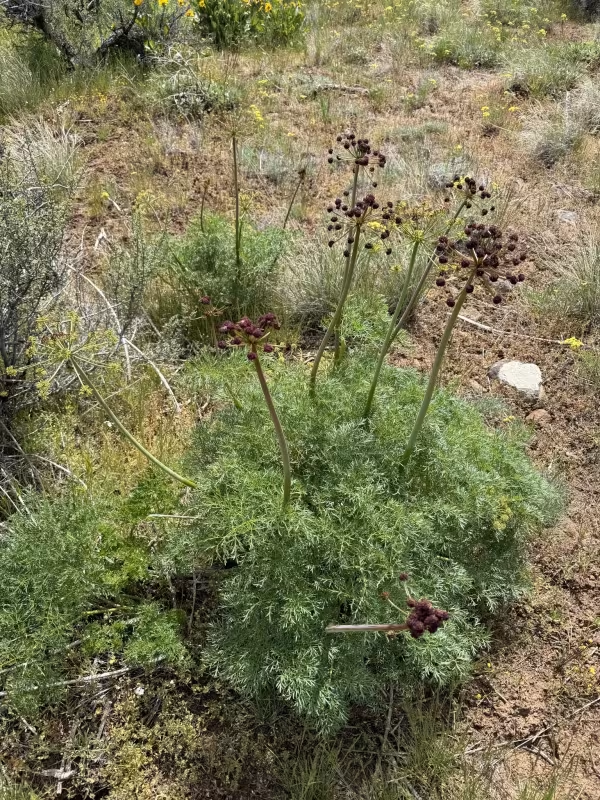
Description
Sowing dates
Lomatium multifidum is a perennial herbaceous plant belonging to the Apiaceae family. Native to arid regions, its seeds require a period of cold stratification to break dormancy and ensure uniform germination in the spring.
For agricultural cultivation, seeds should be sown in late autumn. This allows for natural stratification during the winter months, leading to better germination rates when soil temperatures rise in the spring.
The seeds should be planted at a shallow depth of 1–2 centimeters in well-draining, loose soil. Proper soil preparation is essential, as the seedlings are delicate and prone to damping off if soil conditions are too compact or wet.
If spring sowing is planned, artificial stratification is required. Seeds should be kept in a moist medium at temperatures between 2 and 5 degrees Celsius for 60 to 90 days before being transferred to the field.
Row spacing should be maintained at 30–40 centimeters. This allows for adequate root development and minimizes competition between individual plants, which is crucial for high-quality root production.
Growing requirements
Lomatium multifidum thrives in well-aerated, sandy, or rocky soils. It is highly intolerant of waterlogged conditions, which can lead to rapid root decay, therefore effective drainage is the most critical factor for success.
The plant is a sun-loving species that demands full sun exposure throughout the day. It is highly drought-tolerant, having adapted to the arid conditions of its native habitat in North America.
Temperatures ranging from 20 to 25 degrees Celsius are optimal for active growth. The species is highly hardy, capable of surviving harsh winters, but it is sensitive to high humidity and stagnant air during the growing season.
Irrigation should be applied sparingly. Supplemental watering is only necessary during prolonged droughts in the first year of growth; mature plants generally obtain sufficient moisture from deep soil reserves.
Minimal fertilization is required. Excessive nitrogen can lead to rapid leaf growth at the expense of root development, which is the primary economic component of the crop.
Yield
The economic value of Lomatium multifidum is found in its roots. Harvesting typically occurs in the third or fourth year of growth, when the roots have reached sufficient size and concentration of bioactive compounds.
Average raw root yield can reach 0.8 to 1.5 tons per hectare. Post-harvest processing, including washing, trimming, and drying, reduces the weight significantly but produces a high-value concentrated product.
Seed production is moderate. Under optimal conditions, a commercial plot can produce up to 150 kilograms of viable seeds per hectare, which can be used for future plantings or industry sales.
Thinning the stand is essential to ensure large, uniform roots. Removing crowded plants promotes the growth of stronger primary roots, improving the overall yield quality per hectare.
Harvest timing is critical. It should be conducted after the foliage begins to senescence, as this indicates that the plant has retreated into its dormancy phase, drawing nutrients back into the roots.
Main diseases and pests
Root rot, often caused by Fusarium or Rhizoctonia species, is the most significant threat to the crop. It is almost always a result of poor drainage or excessive irrigation during warm periods.
Pests such as wireworms can cause significant damage by tunneling into the taproot. Such damage not only affects root weight but also creates entry points for secondary fungal and bacterial infections.
Crop rotation is mandatory for this species. Growing Lomatium after other Apiaceae members significantly increases the risk of soil-borne diseases that are shared among family relatives.
Mechanical damage during weeding or cultivation should be avoided at all costs. Roots are sensitive to trauma, and even minor physical injuries can trigger decay in the damp, soil-borne environment.
Pest management should prioritize cultural practices, such as maintaining proper spacing and moisture control, over the use of synthetic pesticides, which may be inappropriate for medicinal crop standards.
Harvesting
The harvest is typically performed using mechanical digging tools capable of reaching a depth of at least 30–40 centimeters. Care must be taken to extract the taproot intact to maximize market value.
Roots should be washed immediately after extraction to remove soil. Any damaged or decayed portions should be trimmed away before the cleaning process is complete to ensure the purity of the batch.
Drying is performed in controlled environments with temperatures strictly maintained below 45 degrees Celsius. This prevents the loss of volatile oils and sensitive compounds that give the plant its medicinal value.
Once dried to a moisture content of 10–12 percent, the product should be stored in opaque, airtight containers. Light and moisture are the primary enemies of long-term storage quality.
After the harvest, the field should be left to rest or planted with non-related cover crops to restore soil organic matter and prevent wind erosion of the light soils required for cultivation.