
Gray's biscuitroot
Lomatium grayi
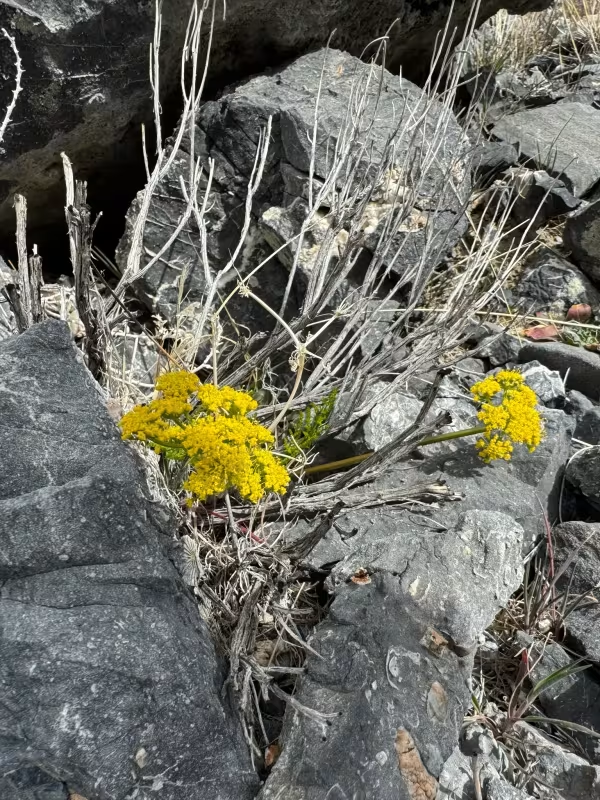
Description
Sowing dates
Sowing of Lomatium grayi seeds is most successful when performed in the autumn, allowing for a natural period of stratification during the winter months.
In controlled environments, seeds should be sown in a well-draining substrate and kept at a temperature of approximately +4°C for at least eight to twelve weeks.
Seeds should be covered with only a thin layer of soil, about 1 to 1.5 centimeters, as they require light to stimulate the germination process effectively.
The seedling stage is characterized by slow initial growth, as the plant invests most of its energy into establishing a robust taproot system.
Proper spacing is crucial for long-term health, with at least 30 to 40 centimeters between rows to allow for adequate ventilation and easy manual weeding.
Growing requirements
Lomatium grayi belongs to the Apiaceae family and is native to the western regions of North America, where it typically inhabits open, rocky mountain slopes.
The species has very specific soil requirements, prioritizing excellent drainage; heavy clay soils that retain moisture will inevitably lead to root rot.
This crop is highly drought-tolerant and adapted to harsh conditions with significant diurnal temperature fluctuations, making it ideal for semi-arid environments.
Full sun exposure is a non-negotiable requirement for this plant, as shaded areas result in leggy, weak growth and poor development of the root system.
The soil should be neutral to slightly alkaline, reflecting the rocky, often calcified substrate of its natural habitat in the wild.
Yield
The economic value of Lomatium grayi is primarily centered on its historically significant taproots, which have been used as a traditional food source and medicine.
Yield production is a multi-year process, as the taproot needs several growing seasons to develop sufficient mass and concentration of phytochemicals.
Harvesting usually occurs at the end of the third or fourth year of growth, ensuring that the plant has reached its full development potential.
Beyond the roots, the plant produces aromatic foliage that contains volatile oils, presenting niche opportunities for the production of essential oils.
Effective yield management requires rigorous weed control during the first two years of the plantation, as the plant is a poor competitor in its juvenile stage.
Main diseases and pests
The most significant threat to a Lomatium plantation is fungal root rot, which typically stems from poor soil drainage or excessive irrigation practices.
Soil-dwelling insects, such as wireworms, can damage the taproot, creating open wounds that facilitate secondary bacterial or fungal infections in the plant.
Foliar diseases like powdery mildew may occur during periods of high humidity or poor air circulation, particularly in densely populated planting zones.
Crop rotation is essential for this species to prevent the buildup of soil-borne pathogens common to the Apiaceae family, such as various leaf spots.
Proactive monitoring and the maintenance of soil structure are the most effective strategies for mitigating these common horticultural risks.
Harvesting
Harvesting should take place in late summer or autumn when the foliage naturally turns yellow and dries back, indicating that the plant is entering dormancy.
Great care must be taken during excavation to ensure the long, delicate taproot is extracted in one piece, as breakage can lead to rapid post-harvest degradation.
Immediately following the harvest, the roots must be thoroughly cleaned of debris and dried in a climate-controlled environment to prevent mold growth.
Sustainable agricultural practices dictate that a portion of the population should be left in the ground to ensure natural seed set and continued site viability.
The final product should be stored in cool, dark, and dry conditions to preserve the integrity of the bioactive compounds and aromatic properties of the root.