
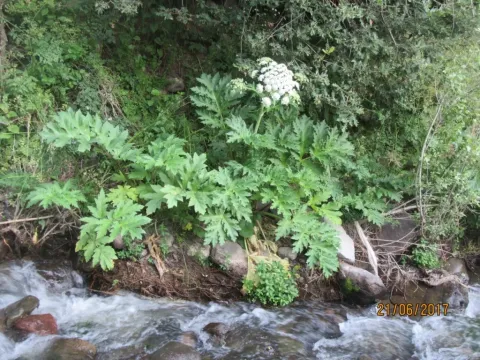
Heracleum trachyloma
Heracleum trachyloma
Heracleum trachyloma belongs to the Apiaceae family and is a perennial herbaceous plant. In agricultural practice, sowing is primarily performed in late autumn or early spring, as soon as the soil reaches the minimum required temperature for germination.
What the section contains
Heracleum trachyloma
The seeds require stratification for successful germination, making autumn sowing the preferred method to ensure uniform emergence in the spring. The sowing depth depends on the soil texture and typically ranges from 2 to 4 centimeters.
The plant demonstrates high germination energy, allowing it to compete effectively with weeds during the early developmental stages. An appropriate planting scheme ensures optimal stand density, which is essential for maximizing vegetative biomass production.
During cultivation, it is important to consider the plant's tendency for vigorous growth, requiring adequate row spacing to facilitate mechanical weeding and field maintenance. Adhering to crop rotation practices helps reduce the risk of specific soil-borne pathogen accumulation.
After sowing, the field should be rolled to improve seed-to-soil contact, which is critical in scenarios with low topsoil moisture. This sowing technology guarantees high field emergence rates and consistent development of the crop.
This species prefers moderately moist and fertile soils with good aeration. The crop displays significant adaptability to various soil types, though it performs most productively on loams rich in organic matter.
Being a heliophilous (light-loving) plant, it should be placed in open areas without shading to achieve high productivity. However, it can tolerate short periods of limited light intensity without suffering significant biomass losses.
The optimal temperature range for active vegetative growth is between 18 and 25 degrees Celsius. The crop exhibits sufficient winter hardiness, allowing for cultivation in regions with moderate climate conditions.
Moisture requirements are moderate; however, prolonged drought may force the plants into a generative phase prematurely, which degrades the quality of the green mass. Supplemental irrigation during critical growth stages significantly improves yields.
The soil pH should ideally be neutral or slightly acidic. Liming may be necessary if the soil is too acidic, as low pH levels negatively impact root system development and nutrient uptake efficiency.
The primary agricultural use of Heracleum trachyloma is as a forage crop for livestock. The green biomass is noted for its high nutritional value and good protein content, making it a valuable resource for feeding programs.
Under intensive management and regular irrigation, the crop is capable of producing multiple cuts within a single growing season. Total biomass yield can reach impressive volumes, comparable to high-performing perennial grasses.
The nutritional quality of the plant remains at a high level until the onset of the flowering phase. Timely harvesting allows producers to obtain high-quality raw material suitable for silage and haylage production.
The plant is also evaluated as a potential source of biomass for biofuel production due to the high cellulose content in its stalks. Research indicates that with proper agronomic management, dry matter yields are consistently high.
Agricultural use requires strict monitoring to prevent the uncontrolled spread of seeds to adjacent lands. Yields are directly dependent on mineral nutrition, particularly the timely application of nitrogen fertilizers.
Heracleum trachyloma is susceptible to fungal diseases such as powdery mildew, especially under high humidity conditions. Implementing good field ventilation and spacing practices is essential for prevention.
Plants may be damaged by various pests, including umbellifer moths and aphids, which can significantly reduce total vegetative mass. Monitoring fields during the active growth period allows for timely interventions and pest control.
To limit the spread of pathogens, the use of resistant varieties is recommended whenever available in the selection pool. An integrated protection strategy includes both biological control methods and narrow-spectrum chemical treatments.
Root rot may occur in cases of waterlogging or poor drainage, which can lead to individual plant mortality. Improving soil drainage is the primary method for mitigating this problem.
Pest damage to seeds during storage requires fumigation or other protective measures to ensure the quality of the seed stock. Regular weeding and maintaining field hygiene contribute to the overall health and vigor of the crop.
Harvesting of the green mass should take place during the stem elongation phase or early budding stage, when the plant contains the highest concentration of nutrients. This timing achieves the best balance between biomass quantity and feed quality.
Mowing is performed using specialized equipment that facilitates the chopping of stems for subsequent ensiling. It is crucial to ensure rapid transport of the raw material to the processing site to minimize moisture and nutrient losses.
When used for hay, additional tedding and drying operations are required, which can be challenging due to the high succulence of the stems. Using active ventilation systems can significantly shorten drying times.
If the objective is seed production, harvest should be conducted at full physiological maturity, when the inflorescences turn brown. It is vital to complete operations before mass shattering begins to avoid significant crop losses.
Post-harvest processing involves cleaning the seeds of impurities and drying them to a moisture content of 12-14%. Proper organization of the harvesting process ensures the preservation of the seed stock for future planting seasons.