
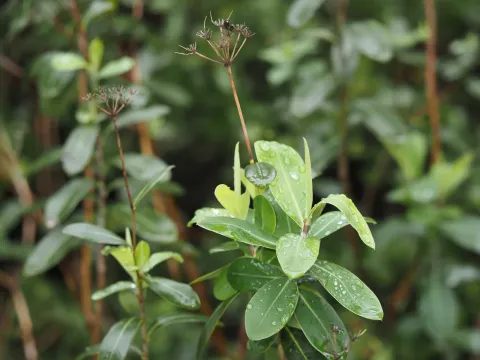
Hare's ear
Bupleurum L.
The sowing of Bupleurum should be carried out in early spring, as soon as the soil warms up, or in late autumn before the soil freezes. Early spring sowing is preferred to ensure that seeds utilize the accumulated soil moisture necessary for germination.
What the section contains


Hare's ear
Seeds should be sown at a shallow depth of approximately 1 to 1.5 cm. Because Bupleurum seeds are small, covering them too deeply can prevent them from emerging, while firming the soil afterward helps ensure successful germination.
For large-scale cultivation, rows should be spaced 45–60 cm apart. This spacing facilitates weed control between rows, which is essential during the initial growth stages when the plant is establishing its root system.
The seeding rate is typically 8–10 kg per hectare. While higher densities may seem beneficial, adequate spacing is required to prevent overcrowding and to ensure that each plant receives enough sunlight and airflow.
Germination usually occurs within 15 to 20 days. During the first year of life, the plant primarily grows a basal rosette, meaning field sanitation and weed management must be prioritized to avoid competition.
Bupleurum is a light-demanding crop that thrives in sunny, open environments. It belongs to the Apiaceae family and is highly sensitive to shading, which can significantly reduce the concentration of active chemical compounds in the plant.
The crop prefers fertile, well-drained loamy or sandy soils with a neutral pH. It is crucial to avoid planting in waterlogged areas, as the species is highly susceptible to root rot caused by poor soil drainage.
While the plant is winter-hardy and can withstand cooler climates, it requires consistent moisture during its initial growth phase. Once established, it develops a deep root system that increases its resilience to short-term dry spells.
Cultural practices should include frequent soil aeration between rows. This helps break up surface crusts formed after rain, promoting better oxygen exchange for the roots and encouraging stronger growth.
Fertilization should be balanced; excessive nitrogen application must be avoided. High nitrogen levels stimulate excessive vegetative growth at the expense of the root-based medicinal compounds that determine the market value of the crop.
The average yield of dried herb material is approximately 15–20 centners per hectare. This value depends heavily on the climatic conditions of the growing season, soil fertility, and the precision of the agronomic practices used.
Maximum productivity is typically achieved in the second year, as the plant matures. By this time, it has developed enough biomass and active compounds to make harvesting economically viable.
Economic success depends on the timing of the harvest. The plant must be harvested during peak flowering, which is when the concentration of flavonoids and saponins is at its absolute highest.
Although Bupleurum is a perennial, the crop should be rotated every 3–5 years. Beyond this period, yield and the quality of the raw material tend to decline, making it less efficient for commercial production.
Key factors for maintaining high yield:
- Effective weed control during the seedling stage.
- Maintaining optimal soil moisture levels during the stem-extension phase.
- Preventing disease outbreaks through crop rotation.
Common diseases affecting Bupleurum include powdery mildew and various types of rust. These fungal pathogens typically thrive in dense, poorly ventilated stands, especially during periods of high humidity.
Preventative measures include choosing well-drained, sunny sites and avoiding planting the crop in areas where other Apiaceae species (like carrots or celery) were previously grown to break the cycle of pathogens.
Pests such as aphids and the parsley worm (umbellifer-feeding larvae) can damage foliage and flowers. These insects can significantly reduce the quality of the harvested product and lead to lower yields.
Regular monitoring of the fields during the growth season is essential. Integrated pest management, including the use of biological control agents, is recommended to keep pest populations below the economic threshold.
Proper sanitation, including the removal of infected plant debris from the field after the harvest, is vital for preventing the overwintering of pathogens that could infect future crops.
Harvesting is performed during the peak flowering stage. This is the period when the plant contains the highest concentration of active therapeutic components, ensuring the final product meets pharmaceutical quality standards.
The aerial parts of the plant are typically cut 10–15 cm above the ground. Using precise cutting equipment ensures that the lower parts of the plant are not damaged, allowing for potential regrowth if the plant is being managed as a perennial.
Immediately after cutting, the raw material must be transported to a drying facility. Drying should occur at temperatures between 45°C and 50°C to ensure that the chemical compounds remain stable and do not degrade.
The dried product should be stored in a cool, dark, and dry environment. Protection from direct sunlight is mandatory, as UV rays can cause the degradation of essential plant compounds over time.
Maintaining rigorous quality control during the harvesting and storage process is critical. A high-quality finished product must be free of mold, foreign materials, and significant discoloration.