
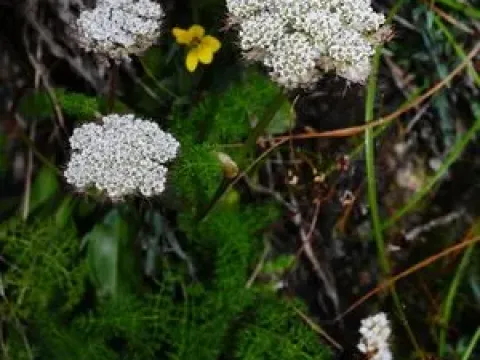
Hymenidium
Hymenidium
Hymenidium is a member of the Apiaceae family, often grown for its specialized vegetative properties and potential use in agricultural systems as a robust perennial or biennial crop.
What the section contains
Hymenidium
Sowing should take place in early spring, as soon as soil temperatures allow for active germination, typically when the risk of severe ground frost has passed.
The seeds should be placed at a shallow depth of 1-2 centimeters, ensuring they remain in contact with moist soil to facilitate quick imbibition and emergence.
Precision seeding equipment is recommended to maintain uniform spacing, which ensures that each plant has enough room for canopy development and air circulation.
Adequate soil preparation, including fine seedbed cultivation, is essential to ensure that the small seeds of Hymenidium have optimal contact with the soil structure.
The crop thrives in well-drained loamy soils that possess a balanced nutrient profile and a neutral pH, avoiding heavy clays that tend to become waterlogged.
Hymenidium requires moderate sunlight exposure and performs best in open, sunny locations where it can maximize its rate of photosynthesis throughout the growing season.
Water requirements are generally moderate; however, supplemental irrigation can be beneficial during prolonged dry spells to maintain high-quality biomass production.
Fertilization regimes should be based on soil testing, with a focus on supplying nitrogen for leaf development and phosphorus for root health during the initial growth stages.
Maintaining a weed-free environment is critical, especially during the seedling stage, as the plant is sensitive to early-season competition from invasive weeds.
Pests such as aphids and leaf miners are known to affect members of the Apiaceae family, often requiring careful monitoring of field edges and canopy density.
Fungal diseases like powdery mildew can proliferate in humid conditions, necessitating proper plant spacing to allow for adequate airflow between plants.
Soil-borne pathogens may cause root issues if drainage is inadequate, highlighting the importance of site selection and maintaining soil structure.
Integrated Pest Management (IPM) strategies, including the use of beneficial insects and resistant varieties, are highly recommended to minimize chemical reliance.
Regular scouting of fields allows for early detection of potential threats, enabling targeted interventions before pests or diseases cause widespread damage.