
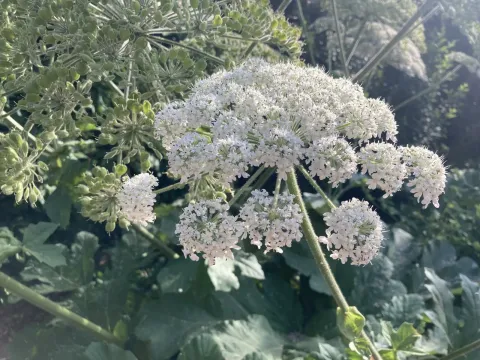
Heracleum platytaenium
Heracleum platytaenium
Heracleum platytaenium is a herbaceous perennial belonging to the Apiaceae family. It is recognized for its potential as a forage crop due to its vigorous biomass production and nutritive value in its early vegetative stages.
What the section contains
Heracleum platytaenium
Sowing is best performed in the autumn or early spring. Autumn sowing facilitates the natural cold stratification process required for optimal germination of the seeds. The soil should be well-prepared and free of debris.
The recommended seeding depth is shallow, approximately 2 to 3 centimeters, to ensure the seeds have sufficient light for germination while remaining protected from desiccation. Row spacing is typically set at 50–60 cm for efficient management.
Seeds should be sown in fertile, well-draining soil to ensure a high plant density. A steady moisture supply is critical during the initial establishment phase to encourage deep root development in young plants.
Regular monitoring of germination rates is essential. In well-maintained plots, the plants quickly form a rosette of leaves, which serves as the base for high biomass yields in the following seasons of the plant's life cycle.
This species thrives in well-drained, loam or sandy-loam soils with a near-neutral pH level. It requires adequate nitrogen levels and organic matter to support the rapid development of its characteristic large, broad leaves.
The plant is known for its tolerance to cold temperatures, making it suitable for temperate regions. However, it requires sufficient soil moisture during the growing season to prevent the plants from becoming overly fibrous too early.
Exposure to direct sunlight or light shade is ideal. While the plant can tolerate partial shade, full exposure to light significantly enhances the vegetative growth rate and the total output of green forage mass.
Effective soil management is crucial, including the removal of perennial weeds that may outcompete the crop during its establishment year. Deep plowing prior to planting helps in breaking down the soil structure for root penetration.
Proper drainage is paramount to prevent waterlogging, as the root system of Heracleum platytaenium is sensitive to anaerobic conditions. Implementing a controlled irrigation strategy can optimize production in areas with irregular rainfall.
The main pathological threats include fungal infections such as powdery mildew and various leaf spots. These are particularly prevalent in areas with high humidity or poor air circulation within the canopy.
Pests such as the umbellifer moth can cause significant damage to the floral parts and foliage. Early detection and targeted management strategies are necessary to protect the yield and ensure seed viability.
Root rots caused by soil-borne pathogens can impact stand density, especially in heavy or compacted soils. Improving soil structure and avoiding monoculture practices are effective ways to mitigate this risk.
Insects like aphids may act as vectors for viral diseases, which can stunt plant growth and reduce the nutritional value of the foliage. Integrated pest management (IPM) is recommended to manage these threats.
Regular sanitation of the field, including the removal of infected plant material, helps in breaking the life cycle of common pests and diseases, ensuring a healthier and more productive crop yield.