
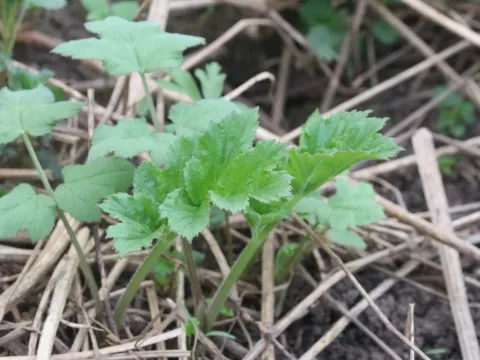
Siberian hogweed
Heracleum sibiricum
Siberian hogweed (Heracleum sibiricum) belongs to the Apiaceae family. Unlike its invasive relative, the Giant hogweed, this species is a valuable and non-toxic forage plant traditionally used in sustainable farming systems.
What the section contains
Siberian hogweed
Planting is best performed in early spring or late autumn. Late autumn seeding is often preferred as it allows for natural stratification of seeds during the winter, resulting in more vigorous germination once temperatures rise.
Seeds should be sown at a depth of 2–3 centimeters. Proper soil compaction after sowing is crucial to ensure moisture capillary movement, which is essential for uniform germination in varying soil conditions.
A row spacing of 45 to 60 centimeters is recommended. This spacing facilitates mechanical inter-row cultivation during the first year, which is essential for managing weeds until the crop develops a dense canopy.
The seeding rate typically ranges from 12 to 15 kilograms per hectare. During the first growing season, growth is relatively slow, so farmers must prioritize weed control to ensure the successful establishment of the stand.
Siberian hogweed is well-adapted to cooler climates and exhibits excellent frost resistance. It is a robust perennial that thrives in temperate regions without requiring special protection during severe winter months.
The crop prefers deep, fertile, loamy soils with good drainage and a neutral pH level. While it can adapt to various soil types, waterlogged or highly acidic soils should be avoided to prevent root degradation.
Being a heliophilous plant, it requires full sun for optimal development. Adequate light exposure is critical for the photosynthesis process, which directly correlates to sugar content and overall biomass production.
Fertilization management is beneficial for long-term productivity. Organic fertilizers such as compost or well-rotted manure enhance soil structure and provide a steady supply of nutrients over the plant's productive life cycle.
Water availability is essential during the rapid vegetative growth phase. Although the plant possesses a strong taproot capable of accessing deep groundwater, significant drought can impede biomass accumulation and nutritional quality.
The primary use of Siberian hogweed is as high-quality silage for livestock. It is rich in protein, essential vitamins, and minerals, making it a nutritious alternative to traditional hay and silage crops.
Under optimal management, yields can range from 30 to 50 metric tons of fresh biomass per hectare. Intensive fertilization practices and proper timing of cuts can maximize these productivity metrics annually.
Harvesting should occur at the budding or early flowering stage to capture the highest nutritional value. Cutting at this phase ensures that the plant tissue remains tender and highly digestible for cattle.
In favorable seasons with sufficient moisture, a second cut is often possible. This second growth, or aftermath, provides a valuable late-season supplement for grazing animals or supplemental fodder.
The ensiling process is efficient due to the plant's sugar content, which facilitates rapid fermentation. This leads to high-quality silage with an appealing aroma, ensuring excellent palatability for farm animals.
Fungal diseases such as powdery mildew and various leaf spot pathogens are the most common issues, especially in humid climates or dense stands. Proper airflow management is a primary preventive measure.
Umbellifer pests, including the parsnip webworm, can damage floral parts and reduce seed yields. Implementing crop rotation and timely removal of plant residues are effective strategies for managing these threats.
Aphid infestations can occasionally occur on young shoots. While usually manageable through natural biological controls, authorized insecticides may be used if pest populations exceed economic injury thresholds.
Weed competition is primarily a challenge during the establishment year. Once the plants reach maturity, their large, rosette-forming leaves effectively shade the soil, naturally suppressing the growth of competitive weeds.
Using certified, pathogen-free seeds is the first step in disease management. Treating seeds before planting minimizes soil-borne risks and ensures that the crop starts with a healthy advantage.
Modern harvesting is performed using forage harvesters equipped with choppers. Maintaining a stubble height of about 8–10 centimeters is important to avoid damaging the crown and to facilitate rapid regrowth.
When producing hay, the thickness of the stems necessitates extra drying time. Mechanical tedding is recommended to ensure uniform moisture loss and prevent the development of mold within the baled material.
Seed harvesting should be timed precisely when the umbels turn brown. Early collection is vital to prevent premature shattering, as seeds can easily drop if left in the field beyond peak maturity.
Post-harvest, seeds should be cleaned and dried to a moisture content of 12–14 percent. Proper storage in a cool, dry environment ensures long-term viability and high germination rates for future planting.
Efficient management of the harvesting window is critical for maximizing both yield and nutritional quality, which ultimately determines the overall profitability of the forage production enterprise.